Translated with AI

























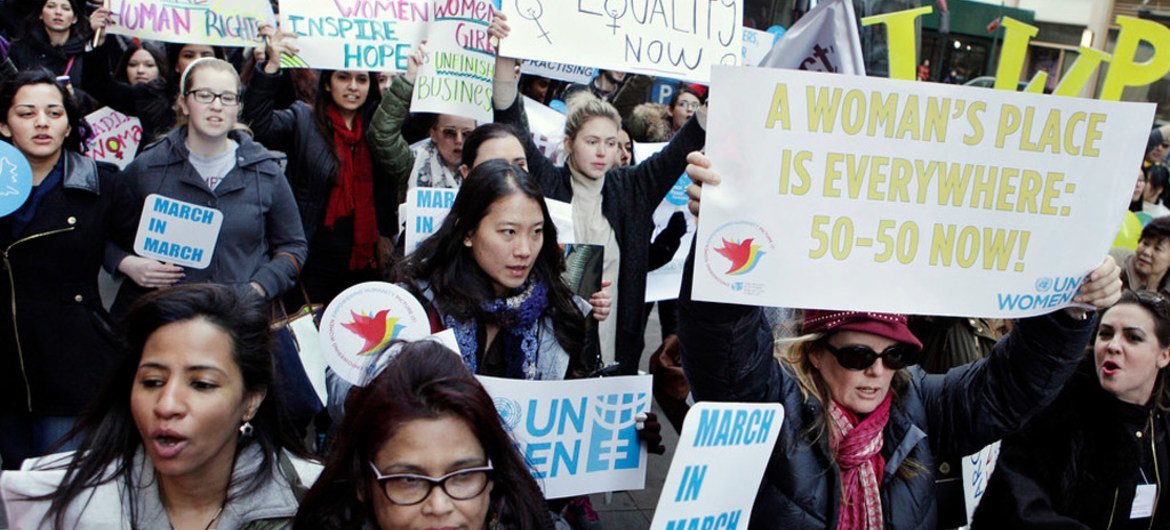
The justice system, designed to uphold rights and uphold the rule of law, is failing to protect women and girls, the United Nations reported ahead of International Women's Day.
According to the UN, worldwide women have only 64 percent of the legal rights that men have.
A new report by the UN Secretary-General notes that in more than half the world's countries, rape is still not defined based on the principle of consent. Thus, a woman may be raped, but for various reasons, the law may not recognize the incident as a crime.
It is also reported that girls can still be forced into marriage under national law in nearly 75 percent of countries worldwide. Furthermore, in 44 percent of countries, the law does not require equal pay for work of equal value, meaning a woman may receive less for the same work.
UN Women Executive Director Sima Bacchus said that when women and girls are denied justice, the consequences extend far beyond the individual case.
According to her, in such a situation, public trust is undermined, state institutions lose legitimacy, and the rule of law weakens.
It is noted that violations of women's and girls' rights are on the rise worldwide—in courts, online, and in conflict zones. In some cases, laws are being rewritten to restrict the freedoms of women and girls and allow abuses to go unpunished.
It is also reported that, amidst the rapid development of technology, women and girls are facing an increase in digital violence, which occurs in a climate of impunity.
In armed conflicts, rape continues to be used as a weapon of war. In the past two years, the number of reported cases of sexual violence has increased by 87 percent.
The UN Secretary-General's report also notes that some progress has been made. For example, 87 percent of countries have adopted laws against domestic violence, and over 40 states have strengthened constitutional guarantees protecting the rights of women and girls over the past decade.
However, as the UN emphasizes, laws alone are not enough. Discriminatory social norms, stigma, victim-blaming, fear, and societal pressure continue to silence victims and impede justice. As a result, even the most severe forms of violence, including femicide, can go unpunished.
Furthermore, women's access to justice is often limited by everyday circumstances, such as the high cost of legal proceedings, lack of time, and distrust of the state institutions that are supposed to provide protection.
Ahead of International Women's Day, UN Women called for an end to impunity and for the rule of law and equality to be ensured not only in law but also in practice in all spheres of life.
It is also reported that the seventieth session of the Commission on the Status of Women, which will be held from 9 to 19 March this year, will be an opportunity to draw attention to the problem of discrimination against women and ensure justice.
UN Women Executive Director Sima Bacchus stressed that now is the moment to speak up for rights and justice so that every woman and girl can live safely, speak out freely, and have equal opportunities.