Translated with AI

































The arrival of spring in China marks the beginning of two key political events: the sessions of the National People's Congress (NPC) and the National Committee of the Chinese People's Political Consultative Conference (CPPCC). However, these sessions are of historic significance, serving as a link between the past and the future, as they summarize the results of the 14th Five-Year Plan and outline the socioeconomic development plan for the next 15th Five-Year Plan.
In 2025, China's GDP surpassed 140 trillion yuan for the first time in history, achieving its goals and objectives. China's economic output reached a new high, demonstrating resilience, a range of advantages, a high degree of flexibility, and enormous potential. Three key driving forces underlie this success: the leadership of high-tech manufacturing, the dynamic growth of new productive forces, and the robust support of the service sector.
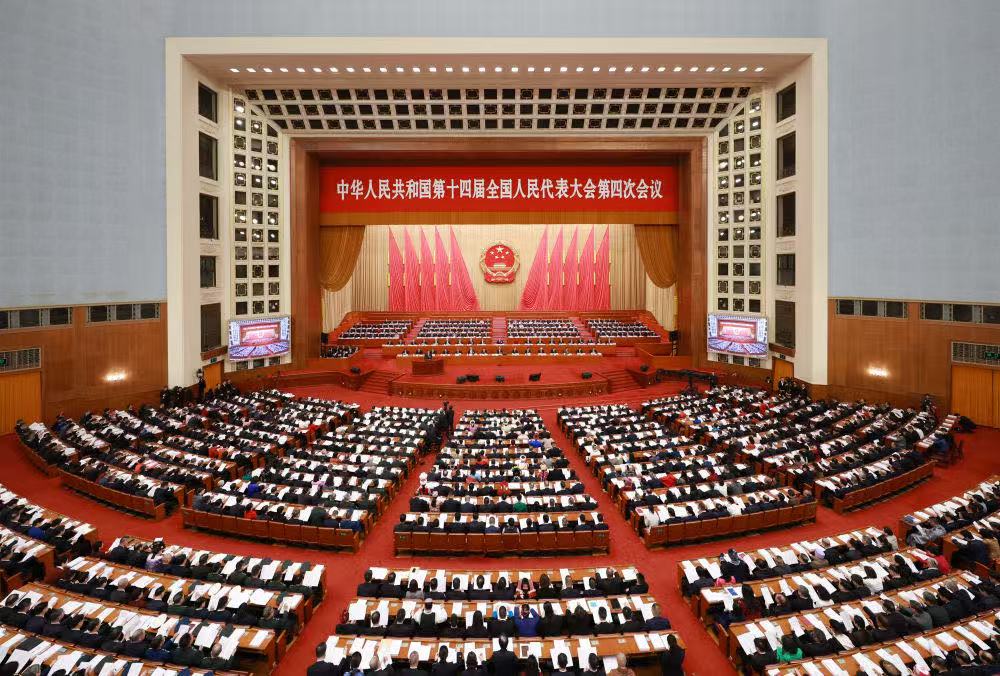
China has set a target of 4.5-5 percent economic growth in 2026 and will strive to exceed this target in practice, according to Premier Li Qiang of the State Council in his Government Work Report, presented on March 5 to the Fourth Session of the 14th National People's Congress. According to the report, in the face of a complex and challenging external environment, expanding domestic demand must be a strategic pillar.
Expanding domestic demand is one of the key objectives of the 15th Five-Year Plan for National Social and Economic Development. In his article on December 16 last year, Chinese President Xi Jinping emphasized that expanding domestic demand is not a temporary measure, but a strategic undertaking crucial to the country's economic stability and security. Implementing the strategy to expand domestic demand is essential for maintaining the long-term, sustainable, and healthy development of the Chinese economy, as well as for meeting the people's growing needs for a better life.
With a population of 1.4 billion, China has the largest population of all developed countries combined. Chinese-made products are exported to over 200 economies worldwide, making China's economic influence global. Expanding domestic demand not only addresses the needs of Chinese consumers but also unlocks consumer market potential, opening up enormous opportunities for economic growth. A more stable, open, and vast market will provide the necessary predictability to the global economy. Indeed, close ties with China open up opportunities for engagement with a large, growing market that is steadily realizing its potential.
The key to expanding domestic demand lies in stimulating consumption. Consumption is not only a means of economic growth but also an integral indicator of satisfying people's growing needs for a better life. In 2025, retail sales of consumer goods exceeded 50 trillion yuan for the first time. The continued growth of consumer demand is fueling so-called "Smithian growth" (growth driven by the deepening division of labor). Today, China is realizing and opening up new directions in the division of labor.

Let's take this example. If you've been to China in recent years, you might have noticed groups of young people with fashionable accessories shaped like small figurines and toys on their bags. In recent years, the toy market has seen a phenomenon of "miniaturization" and "keychainization." While toys once often had tactile functions (stuffed animals) or were purchased as souvenirs (figurines for home decoration), today, a miniature toy keychain is an accessory that accompanies a person in social settings. It's a means of self-expression that's always in plain sight. The "keychain economy" has ignited an entire industrial chain: creative designers (IPs), plush accessory manufacturers, and streamers selling collectible toys, forming a fully-fledged "material-hardware-assembly" cluster with impressive annual revenue growth rates. Furthermore, the "low-altitude" economy is creating new investment and consumer demand, giving rise to a whole range of new activities and business models. More and more Chinese cities are incorporating drone demonstration flights into their city branding and promotion systems. For example, on February 16, a large-scale light show was held on the riverfront in Chongqing, a municipality under central control. 10,000 drones simultaneously took to the skies, creating a moving "light show" in the air above the river and high-rise buildings. Huzhou City in Zhejiang Province plans to build approximately 100 landing pads and open 30 drone routes, launch an "air high-speed line" around Taihu Lake, and use drones for cargo delivery in remote mountainous and inaccessible areas. In the future, a variety of services will be created to meet the diverse individual needs of consumers, allowing people to enjoy the shopping experience.
In 2025, China's service sector demonstrated dynamic growth, led by modern service formats. Service consumption grew steadily, making a significant contribution to national economic growth. This was a result of both the continued unleashing of consumer demand and the emergence of new technologies, new formats, and new business models. The added value of the service sector exceeded 80 trillion yuan for the first time, an increase of 5.4 percent year-on-year; the service sector's contribution to national economic growth reached 61.4 percent, up 3.7 percentage points from the previous year. The development of the service sector is closely linked to manufacturing, creating new demand for industrial products and, in turn, stimulating manufacturing development. Historically, the prosperity of the service sector in industrialized countries is inseparable from support from manufacturing. As the world's largest manufacturer of industrial goods, China has created a solid material foundation for the development of the service sector.

Before bike sharing, no one imagined that one day you could rent a bike right on the street, simply by scanning a QR code. Before mobile payments, no one could have imagined that you could leave your home without a wallet, just with a mobile phone. The same goes for drones: who could have imagined that you would have your own "flying panoramic camera"? Just a few years ago, we couldn't even imagine that driving a car could be "outsourced," like many household chores. These examples prove that at every stage of economic development and in many aspects of people's lives, new supply creates new demand. In the days when people used candles for lighting their homes and pigeons for postal service, there was simply no need for a light bulb or a mobile phone. But as soon as electricity and information and communication technologies appeared, these innovations created new demand. New sources of economic growth are often hidden in people's most real and pressing aspirations for a more convenient life. Technological innovations, by solving customer problems, creating new optimal user scenarios, and providing more specific services, continually transform "innovation variables" into a real "consumption vector." A vibrant consumer market, in turn, provides companies with much-needed resources and incentives to continue research and development, creating an optimal cycle where "demand drives innovation, and innovation meets demand."
In his Government Work Report, Premier Li Qiang noted that China has stepped up efforts to stabilize foreign trade, resulting in stable import and export volumes while improving the quality of foreign trade. China's export growth in 2025 was 6.1 percent. An action plan to stabilize foreign investment was developed, and the number of new foreign-invested enterprises increased by 19.1 percent.
More and more foreign companies recognize the enormous potential of the Chinese market. By deepening their presence in China, they are not only serving the domestic market but also integrating Chinese innovations into the global system. In line with the overall trend of accelerating industrial modernization, foreign investment is increasingly concentrated in areas such as high-tech manufacturing and modern services. China's vast market and the advantages of industrial cooperation offer global investors ever-increasing opportunities. At the same time, China's high-level institutional openness, thanks to the constant improvement of regulations and reform of institutional mechanisms, has created a stable and predictable environment for foreign business development.
(By CGTN correspondent Li Zheya)