 Translated with AI
































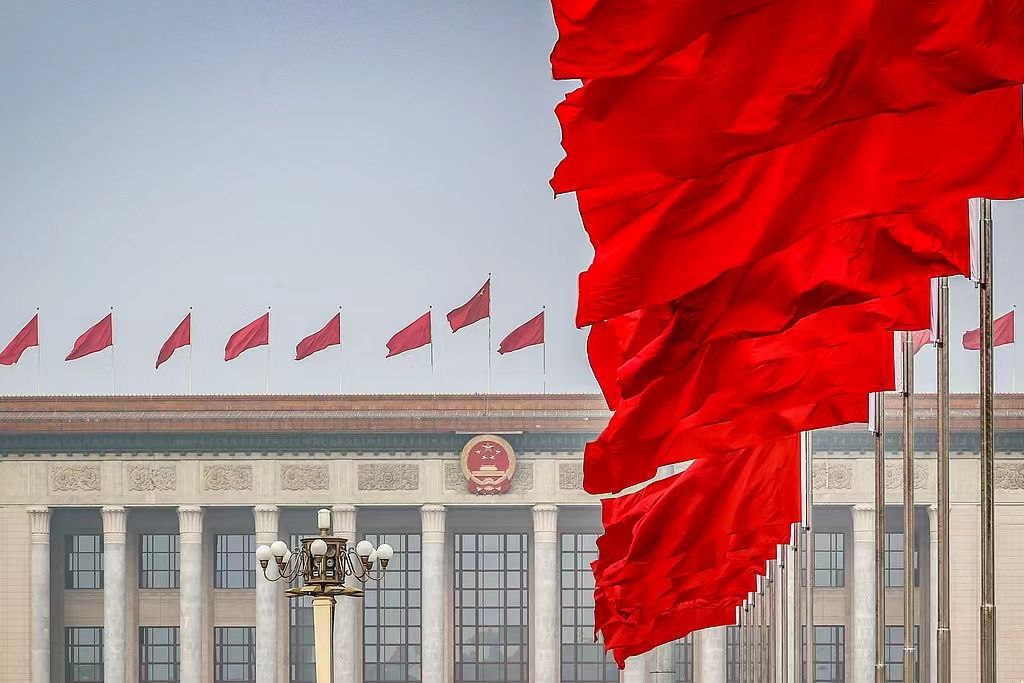
The regular sessions of the National People's Congress (NPC) and the National Committee of the Chinese People's Political Consultative Conference (CPPCC) will be held in Beijing in March 2026. This is one of the most important political events in the country . This year, participants in the "two sessions" will determine the country's development vector for the Fifteenth Five-Year Plan period. For the international community, they are not just a window into the Chinese economy but also a key benchmark for assessing global growth dynamics. Facing challenges such as changing US tariff policy and ongoing geopolitical instability, Beijing is effectively responding with a highly defined agenda and a commitment to high-quality development. 1. What are “two sessions”? The "Two Sessions" represent a unique system in China, combining " opinion gathering, decision-making, and oversight of their implementation ." It also provides a platform for the world to observe changes in the economy and foreign policy of China, the world's second-largest economy. The "Two Sessions" in China consists of two distinct components. The National People's Congress (NPC) serves as the "ultimate decision-making body on national policy." Its primary responsibilities include reviewing the government's work report and major bills, approving the annual budget, and approving personnel appointments. The National Committee of the Chinese People's Political Consultative Conference (CPPCC) serves as a think tank and discussion forum during the pre-decision stage. It brings together elite representatives from economic, scientific, technological, cultural, and other fields to perform functions such as policy consultation, democratic oversight, and participation in governance. CPPCC National Committee members submit proposals and participate in discussions, suggesting optimizations to draft plans to ensure their comprehensive review before final approval. For the outside world, understanding the "two sessions" means understanding the logic underlying China's policymaking: delegates and council members from all walks of life engage in detailed discussions and repeated consultations, during which consensus is reached, and decisions are ultimately made and implemented through strict procedures. This is what ultimately allows China to maintain strategic confidence and guarantee certainty to the world. 2. The Importance of the "Two Sessions" of 2026 The year 2026 is particularly significant as a turning point in China's development: it marks the end of the 14th Five-Year Plan and the beginning of the 15th. The current sessions are designed to address two major objectives. The first is to take stock , systematically analyzing the experiences and miscalculations of the past five years. The second is to chart a course, determining the direction of development for the next five years. The upcoming draft of the 15th Five-Year Plan focuses on key themes, including high-quality development, new productive forces, and green transformation. These seemingly grandiose concepts will ultimately be translated into concrete policies that will directly impact employment, pensions, housing, and the quality of life of every Chinese citizen. In response to the uncertain external environment during the 15th Five-Year Plan period, China will develop a systemic strategy: on the one hand, it will rely on technological sovereignty to achieve breakthroughs in key areas and overcome constraints; on the other, it will create new growth drivers through high-level institutional opening, effectively countering the risks of "decoupling" and "containment." These two paths will interact and mutually reinforce each other, creating a more sustainable strategic space for China's high-quality development. 3. What does China's new plan mean for the rest of the world? For other countries, the "two sessions" will be a clear signal of China's development vector and its determination to pursue a course of opening up. The stability and resilience of the Chinese economy open up new opportunities for the entire world. First of all, the very fact that the Chinese economic giant continues to move steadily amid sluggish global growth is already a significant contribution to the global economy. To put this into perspective, a 5% increase in China's GDP in 2025 would be comparable to the annual economic growth of a moderately developed country. Secondly, the dynamism of the Chinese economy is transforming national opportunities into a shared future for the entire region. Consistently expanding access to the Chinese market opens up new trade opportunities, investment flows, and development space for countries in the region and the world at large. From advanced manufacturing and green energy to the digital economy and improved consumption, the goals of expanding domestic demand and deepening reform and opening up, announced at the "two sessions," make China's vast market even more beneficial for other countries and regions. The predictability and continuity of Chinese policy allows the international community, through the "two sessions," to better understand China's long-term economic and diplomatic strategy in order to build mutually beneficial cooperation. In a turbulent international environment, the direction of relations between major powers often becomes a key factor in regional stability. China, striving to shape a new type of international relations, is, through its clear and consistent policies, creating a favorable environment for cooperation in Eurasia and around the world, making the path to mutual benefit more reliable and promising. The "Two Sessions" of 2026 are undoubtedly destined to go down in history as an event of particular significance. It will mark China's systematic declaration to the world of its entry into a new stage of development, characterized by "larger scale, better quality, and broader global reach." The voices from Beijing will not only shape the contours of China's next five years but, especially for the Eurasian region, will lay the foundation for a shared and mutually beneficial future for the entire world. Author: Chi Jingyu Correspondent for CGTN-Russian, China Media Corporation
Beijing 2026: The 'Decision Moment' that will shape China's next five years


TOP NEWS OF THE WEEK
-

Roads, a medical center, a confectionery shop, and a lyceum were commissioned in the Rasht district.
-
Tajikistan and Mongolia agreed to expand cooperation in the economic, energy, and humanitarian spheres.
-
Three dried fruit producers from Isfara have reached a new level of international certification.


