Translated with AI

























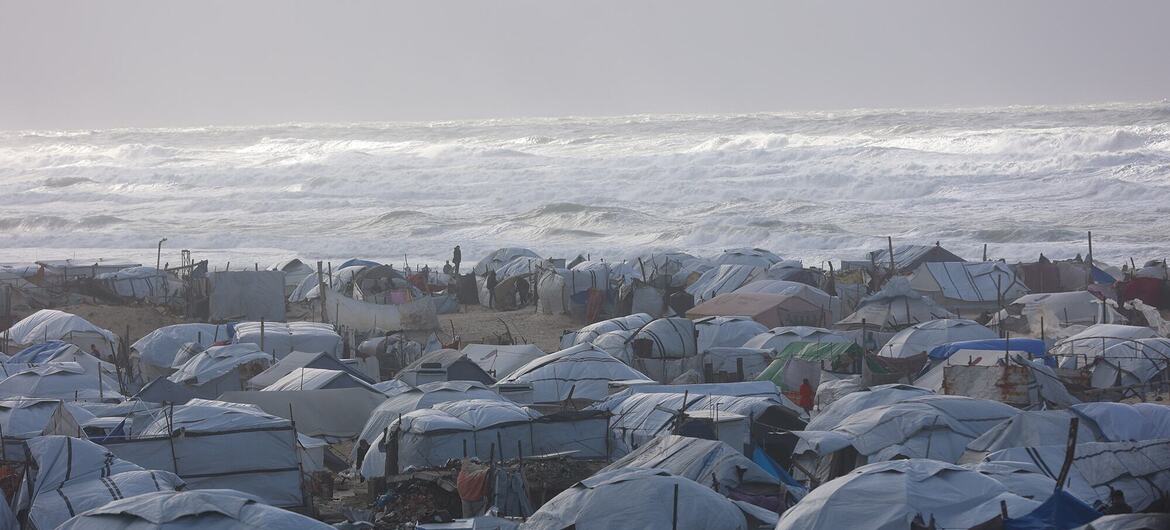
Amid talks on Gaza reconstruction linked to US President Donald Trump's newly created Peace Council, United Nations humanitarian agencies on Friday said there was a critical need to provide aid to people in the region.
Juliet Tuma, Director of Communications for the UN Office for Project Services (UNOPS), emphasized the urgency of "relieving congestion at crossing points and reopening critical routes, such as the Jordan corridor." She noted that while the October 3 ceasefire agreement brought some respite to families, "people continue to die—every day."
According to Tuma, the most vulnerable residents of the Gaza Strip "cannot wait" for a reconstruction plan, which is one of the Peace Council's goals, to be developed. While the plan is being discussed, large-scale humanitarian aid deliveries must be conducted in parallel.
It remains unclear how the UN will support the Peace Council. However, UN Security Council Resolution 2803, adopted last November and welcoming the creation of the Council, emphasized the need for cooperation with the United Nations.
UN Geneva Information Director Alessandra Vellucci stated that the organization is "very committed to doing everything possible to fully implement Security Council Resolution 2803." She added that "the UN has a role to play—leading the delivery of humanitarian aid. We have been doing this for a very long time and will continue to do so within our capabilities."
Since Sunday, humanitarian organizations have provided assistance to 13,000 families in Gaza, distributing hundreds of tents and tarpaulins, according to the UN Office for the Coordination of Humanitarian Affairs (OCHA).
Healthcare needs remain enormous. The United Nations Relief and Works Agency for Palestine Refugees (UNRWA) is attempting to provide care to approximately 15,000 patients a day, despite numerous challenges. UNRWA spokesman Jonathan Fowler reported that "before the war, we had 22 clinics operating throughout the Gaza Strip; now, we have about six left." He added that mobile medical teams continue to operate under extremely challenging conditions.