Translated with AI


































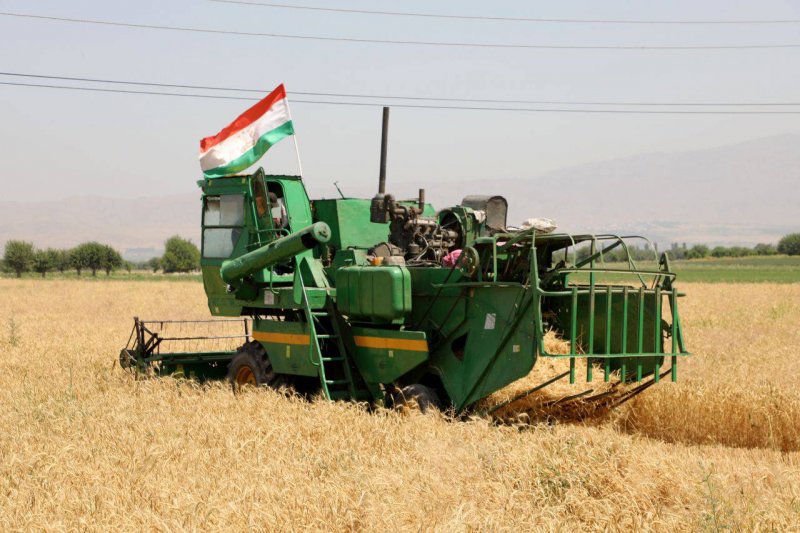
In 2026, Tajik agricultural producers plan to plant 274,039 hectares of grain crops, according to the Ministry of Agriculture of the Republic of Tajikistan.
It is noted that the country's farmers are paying special attention to fulfilling the orders and instructions of the President of the Republic of Tajikistan, Emomali Rahmon, on the development of agriculture and ensuring food security, including the efficient use of water and land resources, compliance with agrotechnical requirements for the cultivation of agricultural crops, harvesting without losses, replanting, and rational land use.
Grain cultivation in Tajikistan is an important agricultural process, the primary goal of which is to ensure food security and high yields. The country's primary grain crops are wheat, barley, and corn.
Providing Tajikistan's population with wheat is considered a critical priority. According to agricultural scientists, wheat is primarily sown in the fall. During this season, the plant effectively utilizes moisture from precipitation in the fall, winter, and early spring, resulting in higher yields for winter wheat than for spring wheat. The growing season for spring wheat, depending on the variety and sowing time, ranges from 75 to 115 days, while winter wheat lasts 240 to 320 days. Thorough soil cultivation is essential before sowing.
Scientists recommend plowing the soil to a depth of at least 25–30 centimeters. Seed placement depth should be 5–6 centimeters on dryland and 4–5 centimeters on irrigated land. Wheat requires adequate moisture, and during the growing season, if natural precipitation is insufficient, it should be watered 3–4 times.
Barley is a multipurpose crop with food, industrial, and feed value. Barley grain is a valuable livestock feed, containing a complete complex of amino acids essential for its development. Barley is one of the main grain sources of protein, with one kilogram of barley grain equivalent to 1.2 feed units.
Barley is cultivated in both autumn and spring. When sown in spring, it is grown on both irrigated and dryland. The growing season for barley ranges from 165 to 200 days, depending on weather conditions. Soil cultivation, barley management practices during the growing season, and harvesting are similar to those used for wheat cultivation.