Translated with AI
































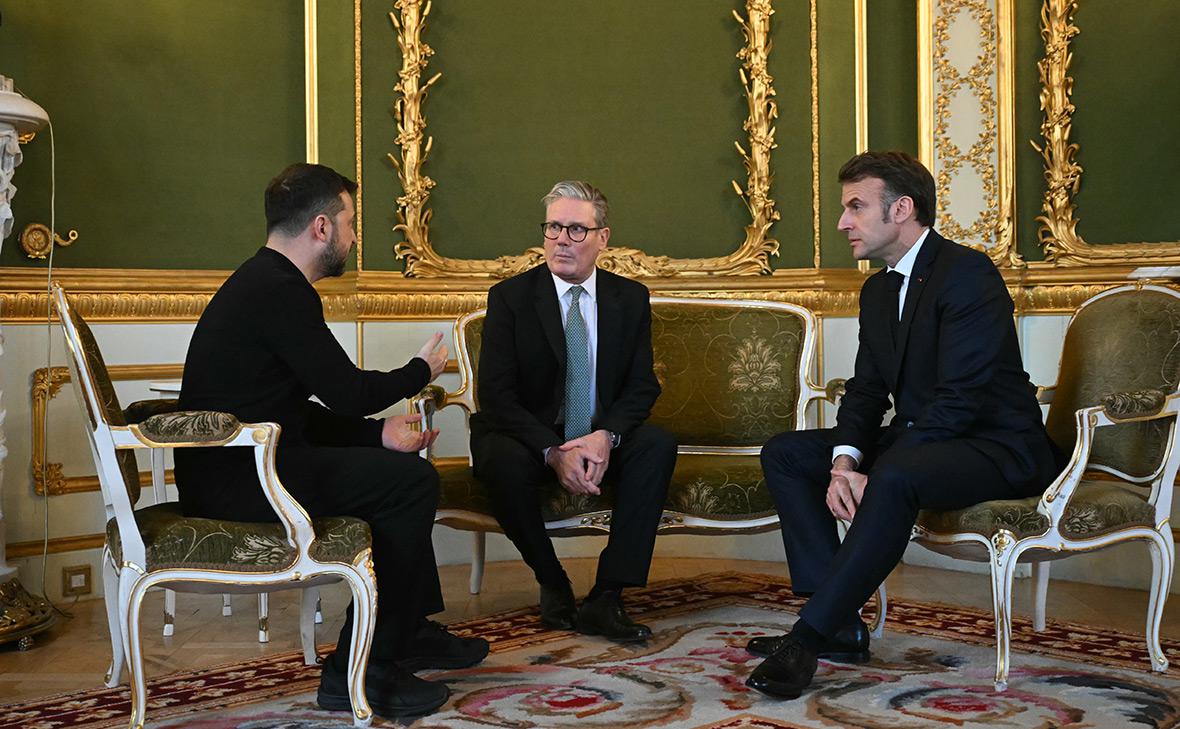
France, the United Kingdom, and Ukraine signed a declaration on the deployment of a "multinational force" on Ukrainian territory after the end of the war. The document was signed following the summit of the "coalition of the willing" held in Paris.
According to the BBC, European leaders signed a declaration following a meeting of coalition members. Commenting on the summit's outcome, British Prime Minister Keir Starmer stated that European and American allies stand together with Ukrainian President Volodymyr Zelenskyy for peace. He stated that the parties have come close to this goal, but the most difficult steps remain.
Following the meeting, information on other security guarantees being developed for Ukraine was also published on the Council of Europe's website. These include the creation of a ceasefire monitoring and verification mechanism with US participation; continued support for the Ukrainian Armed Forces, including funding, arms supplies, and assistance in constructing defensive fortifications; and the development of commitments in the event of a new Russian attack. Furthermore, the plan envisages the expansion of long-term defense cooperation between coalition members.
Participants in the "coalition of the willing" signed a declaration on security guarantees for Ukraine. Following a meeting with US representatives, French President Emmanuel Macron stated that significant progress had been made, reflected in the Paris Declaration, which provides reliable guarantees for a lasting and sustainable peace. He stated that the document marked the first operational rapprochement between the 35 coalition countries, as well as Ukraine and the US. Macron specifically highlighted such agreed-upon points as US-led ceasefire monitoring, long-term defense arms supplies to Ukraine, and work toward the adoption of binding agreements in the event of a further Russian attack.
Furthermore, Kyiv, Paris, and London signed a declaration of intent, which, according to British Prime Minister Keir Starmer, creates the legal basis for the deployment of British, French, and other partner troops in Ukraine after the ceasefire. He emphasized that this document is an important part of the commitment to long-term support for Ukraine. Starmer also stated that, upon the commencement of the ceasefire, the UK and France will establish military centers in Ukraine and construct secure facilities for storing weapons and military equipment.
German Chancellor Friedrich Merz, speaking about Germany's possible participation, stated that the country could deploy its troops in NATO member states neighboring Ukraine, including Poland, Romania, Hungary, and Slovakia. He noted that Germany, in principle, is not ruling out anything.
Ukrainian President Volodymyr Zelenskyy called the agreement with France and the United Kingdom "very concrete." He stated that the Ukrainian side has sufficient information about which countries will participate in the agreement and what contribution each will make. However, Zelenskyy noted that a number of issues, including territorial ones, remain unresolved.
The US delegation at the summit included Special Presidential Envoy Stephen Witkoff and presidential adviser Jared Kushner. Witkoff stated that the meeting resulted in significant progress on several fronts, including a draft security guarantee and a plan for Ukraine's recovery. He noted that the US agrees with coalition members that strong security guarantees and credible commitments to economic prosperity are key to lasting peace in Ukraine, and emphasized that negotiations with the Ukrainian delegation would continue on January 6 and 7.