Translated with AI

























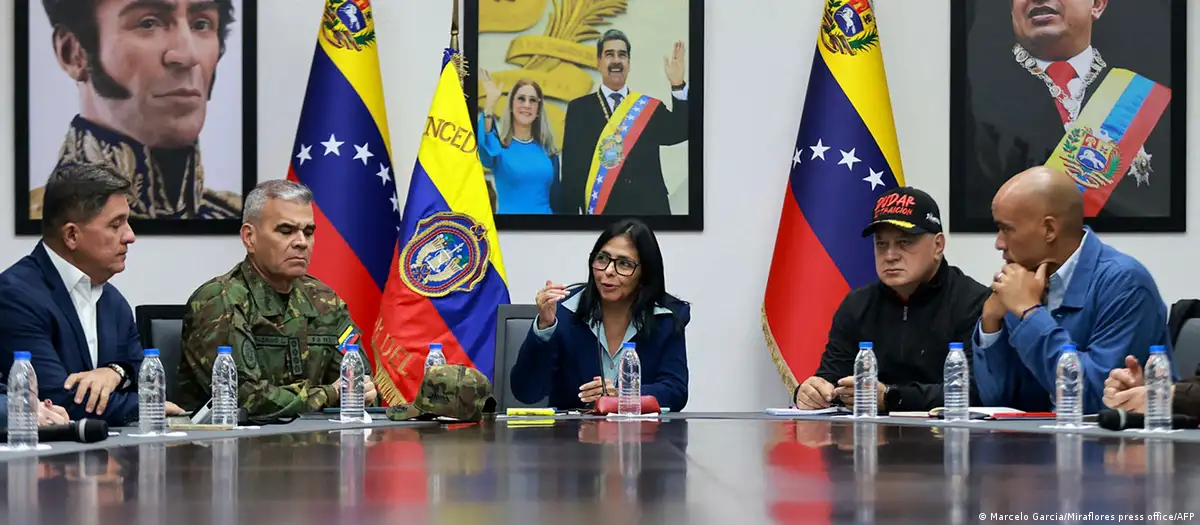
Venezuela and the United States can develop joint cooperation within the framework of international law, said Venezuelan interim President Delcy Rodriguez, who was appointed to the post after the US military evacuated President Nicolás Maduro from the country.
In an open letter published on her Instagram page on Sunday, January 4, Rodriguez emphasized Caracas's commitment to peaceful coexistence with its neighbors, free from external threats, and in an atmosphere of respect and international cooperation. "We prioritize developing balanced and respectful international relations between the United States and Venezuela, as well as with other countries in the region," she wrote.
The interim Venezuelan president invited the US authorities to work together on a program focused on shared development and respect for international law, with the goal of strengthening lasting coexistence in society. She also addressed US President Donald Trump directly, emphasizing that the two peoples and the region "deserve peace and dialogue, not war." According to Rodriguez, these were precisely the goals espoused by Nicolás Maduro, who was previously captured and taken from Venezuela along with his wife to the US.
In response to Rodriguez's initiative, Donald Trump stated that she would pay a "heavy price" if she did not cooperate with the US authorities, adding that the potential consequences could be "likely greater than Maduro's." Earlier, at a press conference marking Maduro's removal, the US president announced that his administration would assume interim control of Venezuela until a "proper" transition of power, with US Secretary of State Marco Rubio expected to assume a key role.
Rodriguez was appointed interim president by a court decision in the country due to force majeure, but she emphasized that Nicolás Maduro remains the legitimate president of Venezuela.
Later, US Secretary of State Marco Rubio clarified that this was not about US control of Venezuela's domestic politics. "We will continue the oil quarantine we imposed earlier, and this will serve as leverage to advance political change in the country," he said on CBS's "Face the Nation." Rubio noted that the measures are aimed at managing the oil industry for the benefit of the people and stopping drug trafficking by the Venezuelan government.
The US announced an "oil quarantine" in mid-December, expecting that the curtailment of oil export revenues would lead to economic hardship in Caracas within weeks.