Translated with AI




























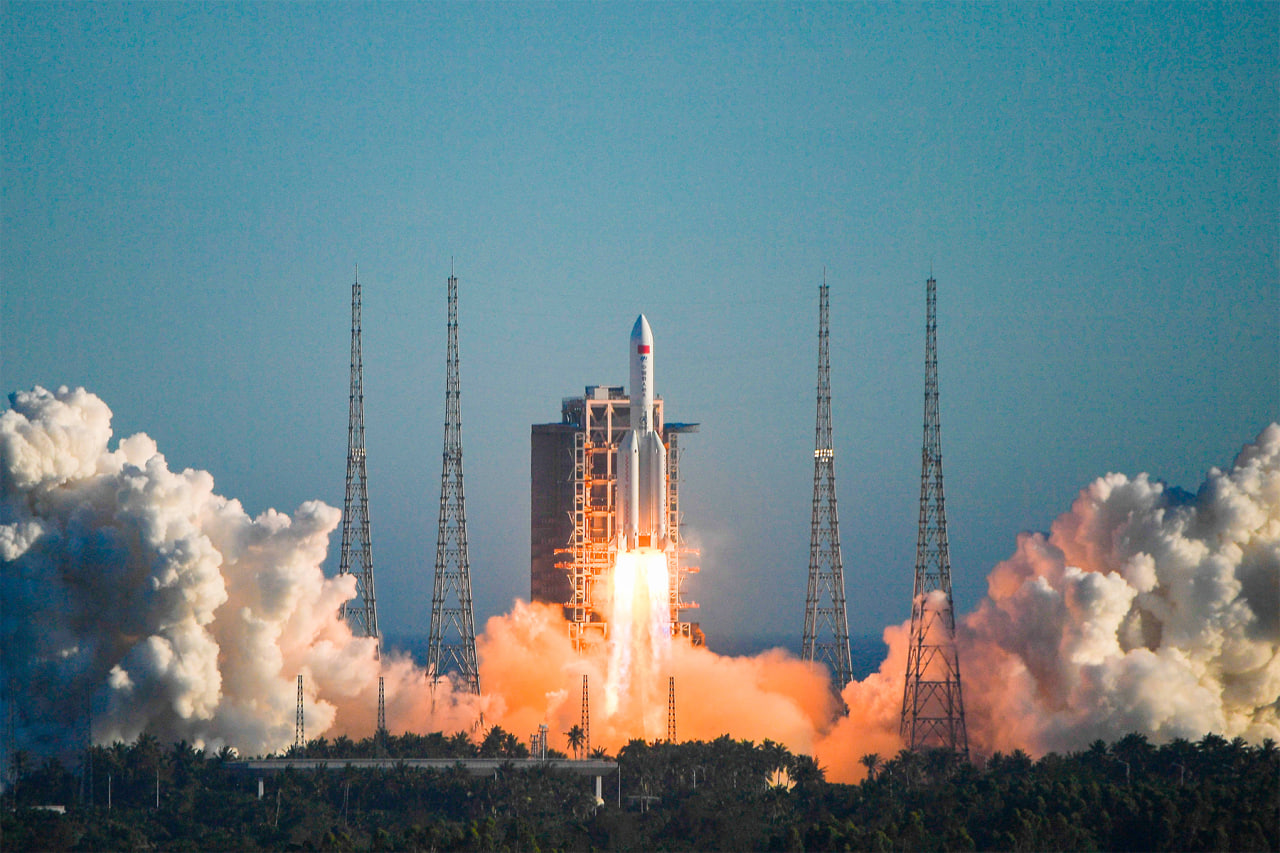
In 2025, China's space program marked a number of breakthrough achievements, from conducting an unprecedented emergency rescue operation in orbit to launching the country's first-ever asteroid exploration and sample recovery mission, according to chinadaily.com.cn.
Throughout the year, the Chinese space station was continuously occupied by humans. On April 24, the Shenzhou-20 manned spacecraft was launched, delivering astronauts Chen Dong, Chen Zhongrui, and Wang Jie to the orbital station for a planned six-month mission. The Shenzhou-19 crew subsequently completed their mission and returned safely to Earth with the results of their scientific experiments.
Before the Shenzhou-20 spacecraft's scheduled return on November 5, specialists discovered microcracks in the return capsule's window, presumably caused by space debris. Consequently, the decision was made to abandon the standard crew return procedure.
With safety as a top priority, China implemented two critical and innovative measures. First, the Shenzhou-20 crew successfully returned to Earth on November 14 aboard the Shenzhou-21 spacecraft, which launched on October 31 with a new crew of astronauts Zhang Lu, Wu Fei, and Zhang Hongzhang. This marked the first successful use of an alternative crew return procedure in the history of China's space station program.
Secondly, an emergency launch was carried out to provide the new crew with a backup return spacecraft. On November 25, the unmanned Shenzhou-22 spacecraft lifted off from Earth and delivered critical cargo to the orbital station, including equipment to repair the Shenzhou-20 window. This first-ever emergency launch of a backup spacecraft demonstrated the increased maturity of China's human spaceflight program and its ability to quickly respond to emergency situations.
Progress in international space cooperation was also achieved in 2025. In February, China and Pakistan signed an agreement to select and train Pakistani astronauts for future missions to the Chinese space station, underscoring China's commitment to developing partnerships with developing countries in human spaceflight.
Significant progress was also made in deep space exploration. On May 29, the Tianwen-2 probe was successfully launched, embarking on the country's first-ever asteroid exploration and sample return mission. The mission, designed to last approximately 10 years, includes exploring asteroid 2016 HO3, collecting and returning samples to Earth, and then studying comet 311P, which is located in the main asteroid belt.
The mission plans to measure the physical parameters of the two celestial bodies, including their orbital dynamics, rotation, size, shape, and thermal properties, as well as study their topography, composition, and internal structure. The data obtained is expected to help better understand the origin, evolution, and characteristics of small celestial bodies.
Furthermore, in 2025, numerous scientific achievements were achieved as part of the space station and lunar exploration programs. The Shenzhou-19 mission achieved breakthroughs in fundamental physics and biology. The crew prepared spinor Bose-Einstein condensates in orbit for the first time using an all-optical trap and created the world's first space platform based on an optical lattice for quantum simulation, cooling atoms to temperatures of tens of picokelvins.
In the field of biology, astronauts successfully raised three generations of fruit flies in orbit, collecting data on their growth and behavior to study the effects of microgravity and hypomagnetic fields on living organisms.
The Shenzhou-20 crew also achieved significant results. The astronauts grew high-quality protein crystals used in the development of tumor treatments, set a world record by heating a tungsten alloy to 3,100 degrees Celsius in materials science experiments, and observed the formation of long-lived metastable structures of charged colloids for the first time in microgravity.
The crew returned to Earth with biological samples—mice, which became the first mammals to undergo a full cycle of experiments on the Chinese space station. The data obtained will allow scientists to study the behavioral and physiological adaptations of organisms to space conditions.
In 2025, important results were also obtained as part of the lunar program. The first experimental "lunar soil bricks," after a year in space, were returned to Earth aboard the Shenzhou-21 spacecraft. Scientists plan to analyze their structure and properties to assess the impact of the space environment, which is key to future construction on the Moon and other celestial bodies.
Furthermore, analysis of soil samples returned from the far side of the Moon by the Chang'e-6 probe revealed that the mantle on that side is cooler than on the visible side. This discovery provided important petrological and geochemical data needed to study the evolution of the Moon and the differences between its hemispheres.