Translated with AI
































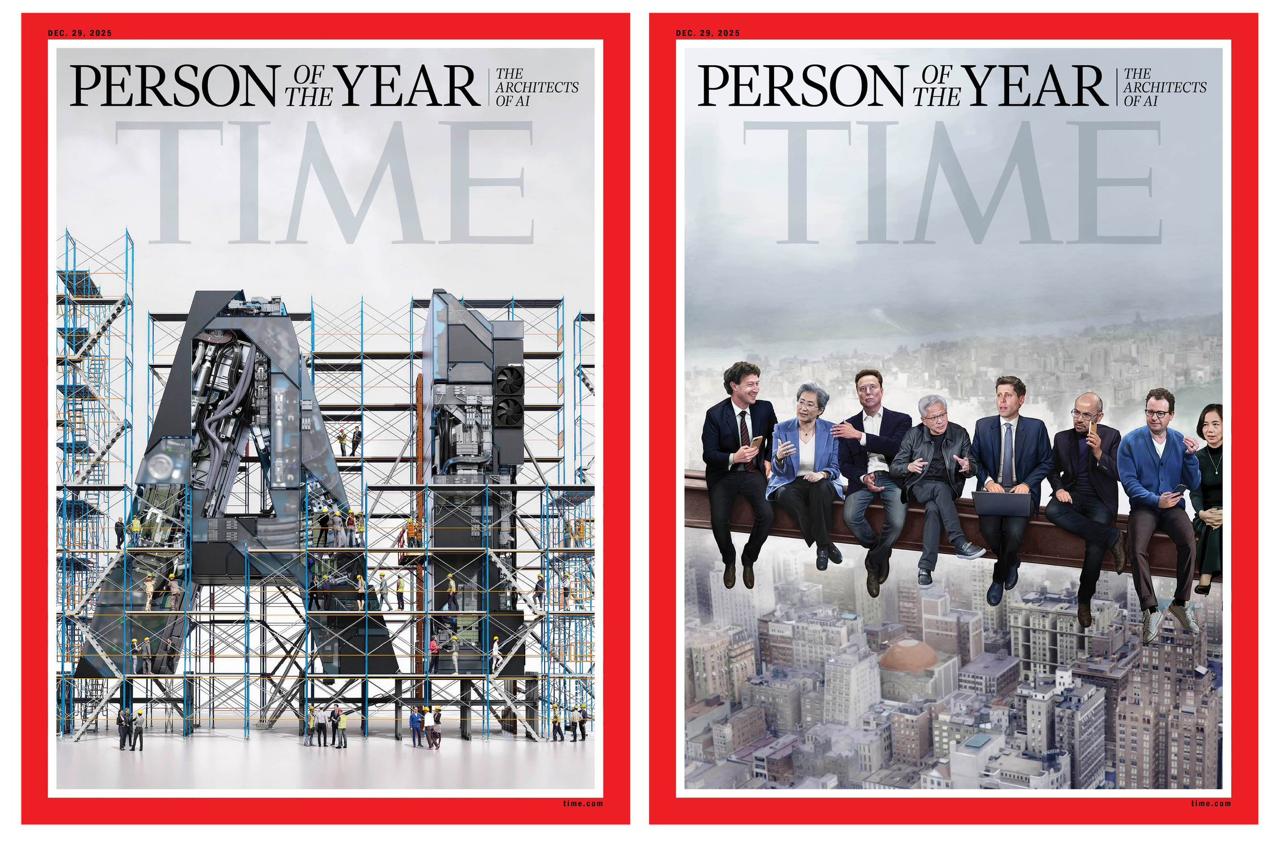
In its final issue of the year, the American magazine Time named the "architects of artificial intelligence" as "person of the year."
The publication's cover, styled after the famous "Lunch on a Skyscraper" photograph, features the CEOs of leading AI companies and AI chip makers. Among them are Meta CEO Mark Zuckerberg, AMD CEO Lisa Su, X owner Elon Musk, Nvidia CEO Jensen Huang, OpenAI CEO Sam Altman, Google-owned AI company DeepMind CEO Demis Hassabis, Anthropic CEO Dario Amodei, and ImageNet founder Fei-Fei Li.
The magazine notes that in 2025, artificial intelligence has changed the world in new ways, sometimes exciting, sometimes alarming. According to Time, Huang and other tech leaders shaped the course of history by developing technologies and making decisions that impact the information landscape, climate, and human livelihoods. Artificial intelligence has reoriented public policy, reshaped geopolitical rivalries, and introduced robots into the home. The publication notes that AI has become, arguably, the most important tool in great-power competition since the advent of nuclear weapons.
Last year, Donald Trump, who was elected to a second presidential term, was chosen as Person of the Year.
According to calculations by the bookmaker Polymarket, AI had the highest chance of becoming Person of the Year in 2025, with a 69% probability. Next came Nvidia founder and CEO Jensen Huang (14%), OpenAI CEO Sam Altman (10%), Pope Leo XIV (4%), and US President Donald Trump (1%).
Since 1927, the American magazine Time has annually chosen a "Person of the Year," the individual who has had the greatest impact on world events over the past year, regardless of whether that impact was positive or negative. The magazine's editorial board does not adhere to strict formal criteria in its selection process.
Previous Person of the Year honors included singer Taylor Swift in 2023, Ukrainian President Volodymyr Zelenskyy in 2022, and entrepreneur Elon Musk in 2021. Russian President Vladimir Putin was named Time's Person of the Year in 2007.