Translated with AI























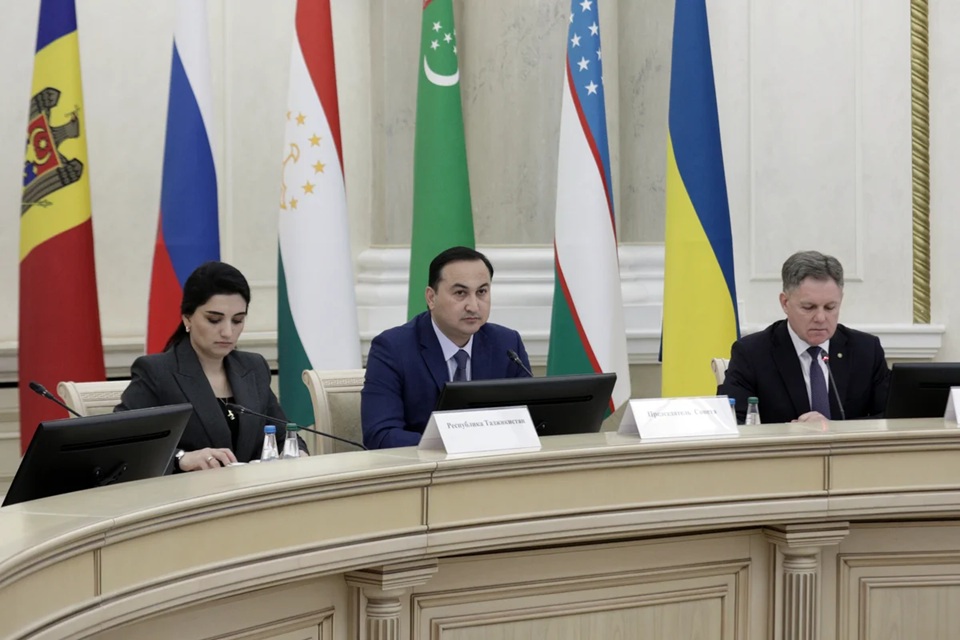
The regular meeting of the Council of Permanent Plenipotentiary Representatives of the Member States of the Commonwealth of Independent States to the statutory and other bodies of the Commonwealth took place on November 25 in Minsk, the press service of the CIS Special Executive Committee reported.
At the meeting, the permanent representatives discussed the activities of the Interstate Council on Geodesy, Cartography, Cadastre, and Remote Sensing for the period 2021–2024. Oleg Skufinsky, co-chair of the Interstate Council and head of the Federal Service for State Registration, Cadastre, and Cartography of the Russian Federation, presented the information.
He recalled that the Council was established in 1992 and is comprised of representatives of relevant government agencies from Azerbaijan, Armenia, Belarus, Kazakhstan, Kyrgyzstan, Moldova, Russia, Tajikistan, and Uzbekistan. Turkmenistan participates in its work as an observer.
The Council's primary goal is to develop a unified geodetic and cartographic space and implement coordinated policies in geodesy, cartography, cadastral surveys, and remote sensing. As part of its activities, the Council determines priority areas of cooperation and forms of interaction between CIS countries. An important task of the Interstate Council is to prepare proposals, programs, and projects on matters within its purview for consideration by the highest bodies of the Commonwealth.
According to Oleg Skufinsky, during the reporting period, the Interstate Council worked to develop and approve an industry-specific interstate program aimed at advancing geoinformation technologies, creating a spatial data infrastructure for CIS countries, and developing cadastral systems and digital maps. These initiatives contributed to strengthening the scientific and technical potential of the Commonwealth countries and enhancing their competitiveness on the international stage.
Particular attention was paid to the creation of a common geographic information portal for the Commonwealth countries, which will ensure compatibility and exchange of information between participating states and will become an important condition for the formation of a unified information space for the CIS.
Oleg Skufinsky noted that one of the significant results of these activities was the creation and development of a regulatory framework governing the main areas of cooperation. Projects and regulations aimed at creating and monitoring open-use digital cartographic products were approved, and recommendations for developing legislation in the field of geodesy, cartography, and spatial data were prepared, significantly improving the accessibility and quality of land and real estate data in the CIS countries.
To strengthen integration and collaboration within the industry, as well as to increase the interest of Commonwealth countries in the work of the Interstate Council, new tools and mechanisms to support its activities have been established and are being actively developed. These include a basic organization for training personnel in the fields of geodesy, cartography, cadastre, and remote sensing of the Earth, as well as a basic scientific and technical organization in these fields and in the field of geoinformation technology.
"Overall, from 2021 to 2024, the Interstate Council's activities were aimed at strengthening integration processes in geoinformation technologies, developing a unified information space, and increasing the efficiency of spatial data use for the benefit of the economies of the Commonwealth states. The Council's work remains relevant and in demand, as the development of digital technologies and the need for accurate geospatial information are becoming key factors in the sustainable development of countries," Oleg Skufinsky concluded.
The members of the Council of Permanent Representatives also took note of the activities of the Council of Heads of Security Agencies and Special Services of the CIS countries in 2019–2024. Sergei Kazyurin, the Council's representative to the CIS Executive Committee, stated that the Council was created to collaborate and coordinate the actions of security agencies and special services in combating organized international crime and in other agreed-upon areas.
During the reporting period, seven Council meetings were held, at which 11 final documents were signed and 35 decisions were adopted. The Coordination Council and Technical Committee of the Joint Database of Security Agencies and Special Services operate within the Council, as do the commissions on scientific and technical cooperation, combating the illegal trafficking of narcotic drugs and psychotropic substances, information security, cooperation in preliminary investigations, international transport security, and economic security.
To expand cooperation, a Commission for Cooperation in the Sphere of Counteracting the Destructive Activities of Foreign Non-Governmental Organizations was established.
Sergey Kazyurin noted that the Council participated in the implementation of provisions and the development of draft cooperation programs to combat terrorism and extremism, interstate anti-crime programs, border security strengthening programs, and deradicalization projects. In the near future, the focus will be on jointly combating international terrorism and extremism, drug trafficking, and other forms of organized crime, as well as scientific research.
Furthermore, Chairman of the CIS Economic Court, German Nurbaev, briefed the permanent representatives on the court's jurisdictional scope. The Economic Court interprets the provisions of treaties and other CIS regulations, based on requests from the highest state authorities and courts, CIS institutions, and the highest courts resolving economic disputes. During the reporting period, the court received 118 requests for interpretation, including 13 from the highest state authorities and courts, 13 from the highest courts, 9 from state ministries and agencies, and 87 from CIS bodies, including 47 requests from the CIS Executive Committee.
The next meeting of the Council of Permanent Plenipotentiary Representatives of the Commonwealth Member States to the statutory and other bodies of the Commonwealth is scheduled for December 23.