Translated with AI





























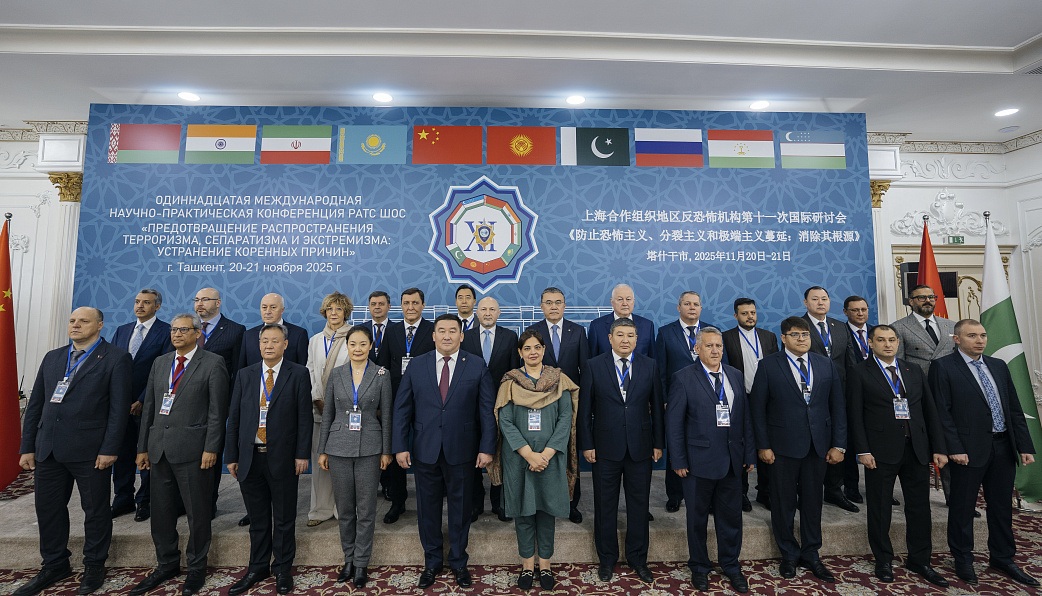
On November 20–21, 2025, the Eleventh International Scientific and Practical Conference of the Regional Anti-Terrorism Structure of the Shanghai Cooperation Organization (RATS SCO) was held in Tashkent, Uzbekistan, on the topic of "Preventing the Spread of Terrorism, Separatism, and Extremism: Addressing Root Causes." This was reported by the press service of the CIS Executive Committee.
The event was attended by representatives of the competent authorities of the SCO member states, including the Republic of Belarus, the Republic of India, the Islamic Republic of Iran, the Republic of Kazakhstan, the People's Republic of China, the Kyrgyz Republic, the Islamic Republic of Pakistan, the Russian Federation, the Republic of Tajikistan and the Republic of Uzbekistan, as well as delegates from the SCO partner states: the Republic of Azerbaijan, the Arab Republic of Egypt, the State of Qatar and the Kingdom of Saudi Arabia.
In addition, the conference was attended by representatives of the UN Office of Counter-Terrorism, the UN Office on Drugs and Crime, the UN Regional Centre for Preventive Diplomacy for Central Asia, Interpol, the executive structures of the CIS and CSTO, the Secretariats of the SCO and CICA, the Eurasian Group on Combating Money Laundering and the Financing of Terrorism, as well as other relevant international organizations and research institutions.
During the conference, participants discussed development trends and the specific transformation of current challenges and threats in the SCO region in the area of countering terrorism, separatism, and extremism, as well as countermeasures at the national and regional levels. An analysis of cooperation and coordination between SCO member states and partners was conducted, and recommendations for improving regional interaction mechanisms were developed.
Participants exchanged views on global trends and the transformation of threats in the area of international terrorism, separatism, and extremism, discussed effective mechanisms for responding to these challenges, and identified areas for aligning global and regional efforts to further improve international cooperation.
Particular attention was paid to the use of socio-economic measures by national governments to counter the radicalization of the population, the involvement of the younger generation in terrorist and extremist activities, as well as the use of modern information and communication technologies, including artificial intelligence, to prevent threats.
The conference also discussed issues related to combating money laundering and terrorist financing, exchanged international experience, and emphasized the importance of holding such scientific and practical events to strengthen anti-terrorism cooperation and trust between countries at the regional and international levels.
Participants highly praised the organization and conduct of the conference and expressed gratitude to the RATS SCO Executive Committee for creating favorable working conditions and a warm welcome.