Translated with AI
























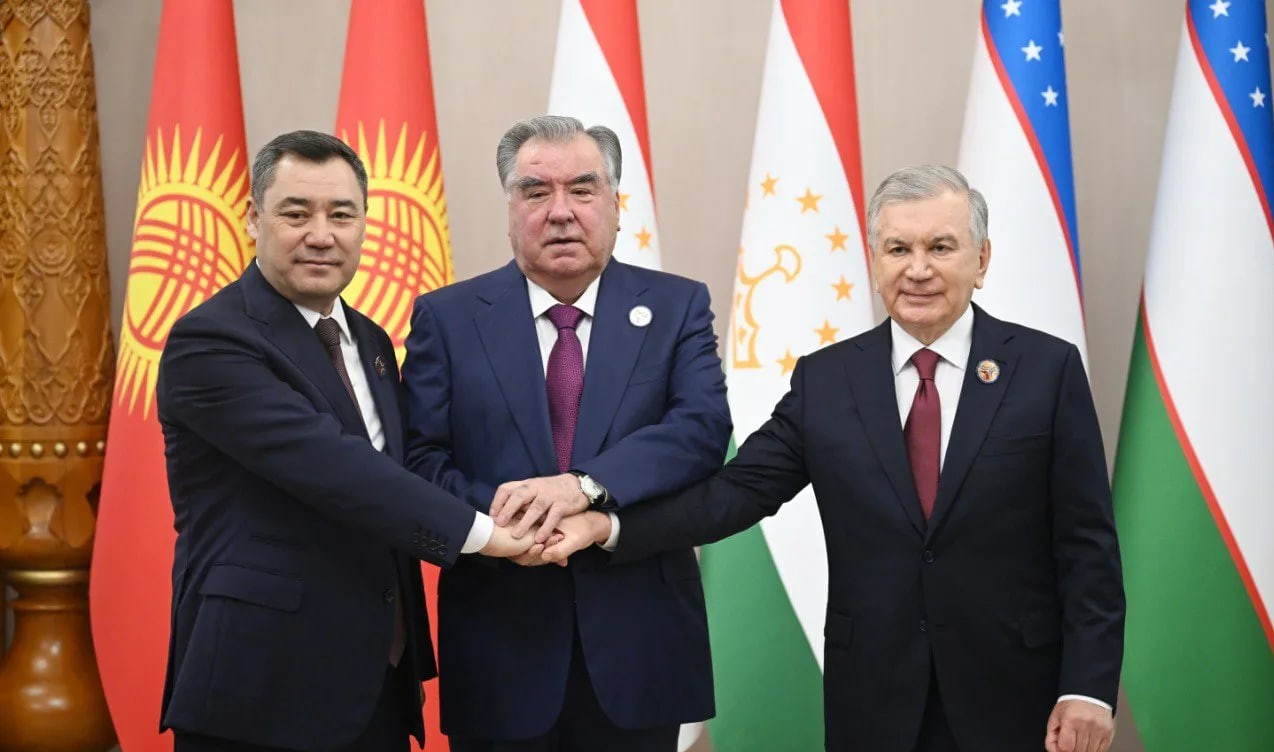
The Declaration of Eternal Friendship and the Agreement on the Junction of the State Borders of Tajikistan, Kyrgyzstan, and Uzbekistan, signed by the three presidents in Khujand, Tajikistan, laid the foundation for peace and prosperity in the Fergana Valley. This was stated by Rustam Khaidarov, Director of the Institute for Asian and European Studies at the National Academy of Sciences of Tajikistan, in a comment to TASS.
"We all witnessed the laying of the foundation for a new Central Asia in March 2025, when the 'Agreement on the Junction of State Borders' and the 'Declaration of Eternal Friendship' were signed in Khujand. These historic documents, on the one hand, put an end to speculation that the Fergana Valley could become a 'Central Asian Balkans,' and on the other, laid a solid foundation for long-term peace and socioeconomic prosperity in the region," Khaidarov emphasized.
The scholar noted that the Fergana Valley is entering a "qualitatively new era of its development." He added that the efforts and political will of Tajikistan, Uzbekistan, and Kyrgyzstan have led to the resolution of all issues related to the demarcation and delimitation of state borders in the region. These initiatives by the presidents of the three countries to strengthen confidence-building measures in Central Asia have been highly praised by the international community.
Khaidarov recalled that in September 2025, the Leo Tolstoy International Peace Prize was awarded to the presidents of Tajikistan, Uzbekistan, and Kyrgyzstan—Emomali Rahmon, Shavkat Mirziyoyev, and Sadyr Japarov. "The prize is awarded to individuals who have contributed to ensuring security based on compliance with international law," he explained.
The scholar also noted the Tajik leader's significant contribution to ensuring global security based on the rule of international law, as evidenced by the adoption of 15 UN General Assembly resolutions at Tajikistan's initiative. He also emphasized that the Agreement on the Establishment of Peace and National Accord, signed in 1997, which ended the five-year civil war in Tajikistan, exemplifies adherence to UN principles for the peaceful resolution of conflicts.
"This process ensured internal stability and was recognized as a model of peacekeeping at the global level," Khaidarov added.
He also noted that Tajikistan has made a significant contribution to preventing terrorism, extremism, and other global threats, promoting numerous initiatives aimed at strengthening regional and global security under the president's leadership. According to the scholar, the Russian Peace Foundation's proposal to award the Leo Tolstoy Prize to Emomali Rahmon recognizes his contributions to conflict resolution, water and climate diplomacy, cultural heritage preservation, and regional stability.