Translated with AI






























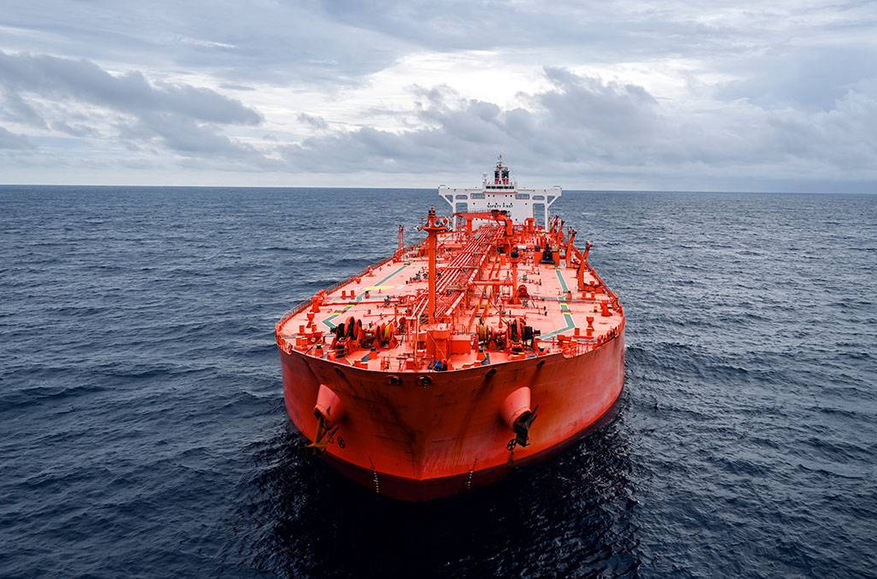
The European Union is considering additional restrictive measures against those registering the so-called "shadow fleet" of Russian oil tankers, Bloomberg reports , citing sources. They reported that a meeting of EU foreign ministers will be held in Brussels on November 20, where these plans will be discussed in more detail, according to The Insider .
In a document circulated before the meeting and obtained by Bloomberg, Poland proposed new rules and coordination, particularly on complex issues such as the right of authorities to board a ship.
According to the document, the EU conducted extensive diplomatic outreach to flag-keeping states and was "largely successful" in persuading many of them to deregister these vessels. Warsaw also proposed engaging with port and coastal states, as well as those that support the operations of such vessels. Any new measures will be part of the 20th EU sanctions package, added sources who wished to remain anonymous.
Why is this important and what problems will it not solve?
Freedom of navigation is enshrined in international law, including the United Nations Convention on the Law of the Sea (UNCLOS), which serves as the foundation for regulating all maritime activity. According to this document, any vessel flying a national flag, meaning registered, has the right of innocent passage—including through the Danish Straits and the Baltic Sea, which is divided between the exclusive economic zones (EEZs) of coastal countries that exercise partial sovereignty over them.
A vessel's lack of a flag is the primary reason for its detention. Estonia took advantage of this by detaining the tanker Kiwala (IMO: 9332810), which was sailing under a false flag of Djibouti, in April 2025. France then detained the same vessel, now under the new name Boracay, on September 27, also under the false flag.
Such detentions have been few, although "shadow fleet" vessels freely and regularly transit the Baltic Sea and the Danish Straits. The reason for Europe's apparent hesitation lies primarily in the imperfections of international maritime law, which Russia actively exploits, Gonçalo Saís Erausquin, a research fellow at the Royal United Services Institute in the UK, and Pierre Thévenin, an expert on international maritime law at the Stockholm International Peace Research Institute, told The Insider.
Thevenen explains that the authorities cannot go beyond detention, as demonstrated by the fate of the tanker Kiwala/Boracay—it was soon released by both Estonia and France. Confiscation of tankers is virtually impossible, even if they are operating without any documents, registrations, permits, insurance, etc., says Thevenen. According to the Convention, a vessel cannot be detained in port for an extended period. If it pays a fine, as stipulated by French law, for example, and passes all the necessary technical inspections to obtain a sailing permit, then its further detention and the detention of its crew are unacceptable.
Thévenin: "If a vessel that has paid a fine is arrested, it could lead to a claim in the International Tribunal for the Law of the Sea. In other words, current maritime law is insufficient to fully resolve the issue. The confiscation situation is dangerous because if the European Union takes such action, other states, such as China or Russia, could do the same. Essentially, this would mean the end of freedom of navigation, and no one wants that."
However, the countries themselves are not too eager to make arrests, says Erauskin:
"An interception could escalate tensions, as Russia's response to the tanker Jaguar demonstrated. < Russia sent fighter jets to the vessel while the Estonian Navy was attempting to detain it in May 2025, immediately after which Russia detained the Estonian vessel Green Admire, releasing it shortly thereafter – The Insider's note >.
But even if a vessel is detained and brought into port, the intercepting state faces a host of difficult questions: who will pay for the vessel's upkeep, how long is the country willing to keep a tanker taking up space in port, what to do with the cargo, what to do with the crew… The issue remains contentious, and many "shadow fleet" vessels sailing under false flags continue to navigate unhindered."
In summary, theoretically, an unflagged vessel has no right to navigate the high seas or the EEZ and can be arrested by the navy or coast guard of any state. However, the question remains: what to do with the vessel after arrest? As a result, the Baltic and Scandinavian states, like other coastal countries, have extremely limited options.
In fact, there has only been one seizure of a "shadow" vessel by a European country: in January 2025, Germany towed the tanker Eventin to waters near the port of Sassnitz after the oil-laden vessel drifted off the coast of Rügen, posing a serious environmental threat. Later, a German Finance Ministry spokesperson clarified that "customs measures have not yet been adopted in a legally binding form," so the tanker's final fate remains unclear. However, the vessel was re-registered under the German flag, the crew was replaced, and the cargo, according to Der Spiegel, was declared German property.
Experts interviewed by The Insider admit that the rise in fraudulent registrations and flag-hopping has practically destroyed the system. The only real solution is a new IMO ship registration convention, but this is a long-term prospect. The IMO's legal committee is currently reviewing the issue of fraudulent registrations, but the process is very slow, according to a source familiar with the process.
According to him, effective measures are likely to be expected only if an environmental disaster occurs off the coast of a rich and influential state due to the fault of such a tanker (the "shadow fleet" includes many old vessels) – most IMO regulations are adopted only after crises.