Translated with AI























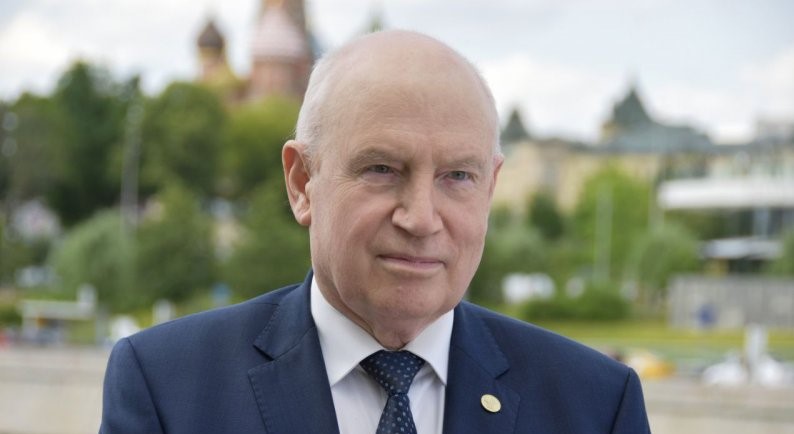
In 2025, the Republic of Tajikistan will chair the Commonwealth of Independent States. Ahead of this crucial event—the CIS Heads of State Summit, which will soon be held in Dushanbe—a correspondent for the National News Agency of Tajikistan, Khovar, spoke with CIS Secretary-General Sergey Lebedev, who discussed the achievements of Tajikistan's chairmanship, key initiatives to be discussed at the upcoming summit, and the importance of strengthening regional security and economic cooperation within the Commonwealth.
— Sergey Nikolaevich, Tajikistan will chair the CIS in 2025. How do you assess the initial results and events during this period?
— It should be noted that this is already the third (2011, 2018, 2025) chairmanship of the Republic of Tajikistan in the Commonwealth, starting from January 1, 2009, when the heads of state of the CIS approved the Regulation on the chairmanship of the Commonwealth of Independent States.
The Republic of Tajikistan consistently effectively chairs CIS bodies, promoting integration, security, and sustainable development among our countries. Regarding the current chairmanship, I can confidently say that all planned events, over 110 in number, are being implemented on time and in accordance with the Concept of the Republic of Tajikistan's CIS Chairmanship. To date, the majority of these events have been held at a high organizational level, both in Tajikistan and abroad, with the support of other CIS member states.
Thus, two meetings of the Council of Heads of Government (June 5 and September 29), meetings of the Council of Foreign Ministers, the Economic Council, the Council of the CIS Interparliamentary Assembly, and more than 40 meetings of sectoral cooperation bodies were successfully held. In May of this year, the 18th Forum of Creative and Scientific Intelligentsia of the CIS Member States was held in Dushanbe. From June 16-20, the Youth Friendship Festival 2025 was held in Nurek, Dangara, Temurmalik, Kulyab, and Muminabad. Many other events were also held.
— What key priorities set by Tajikistan during its CIS chairmanship have already been achieved?
Tajikistan's chairmanship of the CIS is aimed at promoting the achievement of the goals and objectives of the Commonwealth's strategic documents covering the medium term.
In accordance with the Concept for Further Development of the CIS, the Republic of Tajikistan has initiated measures to further improve the CIS's activities. Special consultations on this topic were held with the participation of interested ministries and agencies.
An important issue of the chairmanship was the coordination and adoption of the Action Plan for the implementation of the second stage (2026-2030) of the CIS Economic Development Strategy for the period up to 2030. On September 29, the Council of Heads of Government approved this plan. Also adopted in the economic sphere this year were the Agreement on Cooperation in the Development of Heavy Engineering Industries, the Concept for the Development of Light Industry, the Concept for the Harmonization of National Air Traffic Management Systems of the Commonwealth, the Concept for Cooperation in the Field of Public Health, the Strategy for Scientific and Technological Development of the Commonwealth for 2026-2035, the Strategy for Cooperation in the Development of the Information Society and Digital Economy for the Period up to 2035, as well as the Strategy for the Digitalization of the Main Multimodal Transport Corridors of the CIS States, developed by the Republic of Tajikistan.
— What can you say about political interaction over the past period?
— The Concept of the Republic of Tajikistan's Chairmanship of the Commonwealth emphasizes the need to further promote the positive image of the CIS on the global stage as an integration association, and to expand the Commonwealth's ties with the United Nations and regional organizations—the SCO, CSTO, and the EAEU—including through a series of joint events on specific topics.
To this end, on August 26, 2025, at the United Nations Headquarters in New York, during the 79th session of the UN General Assembly, a resolution introduced by Tajikistan, "Cooperation between the UN and the CIS," was adopted. The document was co-sponsored by Armenia, Belarus, Kazakhstan, Kyrgyzstan, the Russian Federation, Turkmenistan, and Uzbekistan. The adoption of the resolution demonstrated that the CIS remains a reliable partner for the UN in ensuring international peace and security, sustainable socioeconomic development, and respect for human rights.
Also, in order to intensify cooperation with interested states, their associations and international organizations, a draft Resolution of the Council of Heads of State of the CIS “On the establishment of the ‘Commonwealth of Independent States Plus’ format” has been developed, which is expected to be considered at the upcoming meetings of the Council of Foreign Ministers and the Council of Heads of State.
In accordance with a previously adopted decision at the SCO summit in Tianjin (PRC), at the initiative of the Republic of Tajikistan, the issue of "Granting the Shanghai Cooperation Organization Observer Status in the Commonwealth of Independent States" was submitted to the upcoming meetings of the heads of foreign policy departments and heads of state of the Commonwealth.
Under the auspices of Tajikistan, a series of multi-level inter-MFA consultations have been held. Their main goals are to exchange information and opinions on current foreign policy issues of mutual interest, thereby enabling the coordination of approaches and alignment of partners' positions.
In particular, the following issues were considered: interaction within the Commonwealth in 2025, human rights issues in the context of cooperation on international platforms of multilateral economic diplomacy, including within the framework of universal and regional formats, arms control, disarmament and non-proliferation, coordination of the positions of CIS member states on the topics of the agenda of the 80th session of the UN General Assembly.
In addition, a draft Plan for multi-level inter-MFA consultations within the Commonwealth for 2026 was agreed upon and submitted for consideration to the Council of Foreign Ministers.
A meeting of CIS heads of state is planned for the coming days. What are the main topics to be discussed at this meeting? What important decisions or initiatives are expected at the upcoming CIS summit?
Nineteen issues are being submitted for consideration by the Commonwealth heads of state. Among the documents planned for signing, a significant place is occupied by decisions addressing issues of cooperation in security, the fight against crime, terrorism, and extremism.
Specifically, the CIS summit plans to adopt: cooperation programs for the Commonwealth member states in the field of countering terrorism and extremism for 2026-2028, as well as in strengthening border security at external borders for 2026-2030;
Concept of military cooperation until 2030;
Joint statement of the heads of state of the Commonwealth on cooperation in the fight against transnational crime;
The Declaration on Cooperation in Ensuring Regional Energy Security and other documents that I mentioned above.
— What initiatives or projects will be implemented in 2025 within the CIS?
I would like to remind you that in October 2024, for the first time within the Commonwealth of Independent States, the heads of state established the honorary title "City of Labor Glory. 1941-1945." And on June 26, 2025, the Council of CIS Heads of State decided to award this honorary title to 19 cities in the Commonwealth. I would like to especially emphasize that the capital of Tajikistan, Dushanbe, was also awarded this prestigious title. The title was awarded based on the significant contribution of the residents of these cities to achieving Victory in the Great Patriotic War, their mass labor heroism, and dedication to ensuring the uninterrupted production of military and civilian goods.
Also during the year of Tajikistan's chairmanship, the initiative of the President of the Republic of Kazakhstan, Kassym-Jomart Tokayev, to establish a Commonwealth of Independent States Volunteer Forum was completed. Here in Dushanbe, at a meeting of the CIS Heads of Government Council held on June 5 of this year, the Regulations for the Volunteer Forum were approved.
The forum will become an annual event aimed at sharing experiences, developing the volunteer movement, and strengthening international cooperation. It will be held under the auspices of the Youth Affairs Council in each Commonwealth state on a rotating basis.
— What impact does Tajikistan's chairmanship have on strengthening regional security and stability?
— It is known that Tajikistan, in order to implement the UN Global Counter-Terrorism Strategy, has developed and adopted two strategies to combat extremism and terrorism.
Within the Commonwealth, the Republic of Tajikistan also demonstrates interest in continuing the fight against terrorism and extremism and strengthening practical cooperation in ensuring security.
Tajikistan chaired meetings of relevant CIS bodies in the areas of security, intelligence, and border cooperation. In the area of security, documents were approved on a joint communications system for the CIS armed forces and a radiation and biological monitoring system.
As I have already noted, at the upcoming meeting of the Council of Heads of State, a number of programs and other documents aimed at strengthening regional security and stability are also planned for signing.
— What steps have been taken to intensify cultural and humanitarian cooperation between the CIS countries during this period?
— In 2025, the most important humanitarian projects were implemented: Lachin – the cultural capital of the CIS, Ganja – the sports capital, Gabala – the youth capital, the III CIS Games (Republic of Azerbaijan).
The Council of Heads of Government of the CIS adopted a decision to establish the Commonwealth badge "For the development of tourism in the Commonwealth of Independent States."
Such events undoubtedly open up new opportunities for cultural exchange and contribute to the promotion of intercultural cooperation and dialogue.
On September 29, the heads of government of the Commonwealth countries approved the Scientific and Technological Development Strategy for 2026–2035. This is an important step in the further development of fundamental research in various fields and the practical implementation of scientific developments.
— What steps taken during Tajikistan's chairmanship will contribute to the development of the economic, transport, and energy sectors in the CIS?
— During Tajikistan's chairmanship, the final stage of developing an important document—the Action Plan for the Implementation of Stage 2 of the CIS Economic Development Strategy for the Period up to 2030—occurred. Representatives of Tajik government agencies actively participated in its development.
The action plan, to be implemented in 2026–2030, includes the development and implementation of joint measures and specific projects to maintain and expand mutually beneficial cooperation ties between enterprises and technologically related industries, support investment and scientific cooperation, ensure the digitalization of the national economy, intensify cooperation in the field of innovation, develop freight transportation, including transit, across the state borders of the CIS member states, as well as increase mutual trade in goods and services, and ensure the effective operation of national payment systems.
A significant place in the Action Plan is occupied by issues of ensuring a favorable business climate in the CIS member states, building scientific potential, and cooperation in the fields of healthcare and education.
In the concept of Tajikistan's chairmanship of the Commonwealth of Independent States in 2025, approved by the President of the Republic of Tajikistan, priority attention is given to the topic of cooperation in the industrial sector.
A key focus in this context is restoring and strengthening industrial partnerships and cooperative ties between our countries and creating efficient production chains. The Agreement on Cooperation between CIS Member States in Developing Heavy Engineering Industries, prepared by the Republic of Tajikistan and signed at the CIS Council of Heads of State on June 5, 2025, aims to develop industrial production, provide it with machinery and equipment in line with new technological solutions, encourage industrial enterprises in our countries to effectively collaborate, and enhance the competitiveness of their products.
I would like to highlight another very important point: in June 2024, after a 15-year hiatus, the Republic of Tajikistan's power grid resumed parallel operation with the interconnected power grids of Central Asian states. This event will undoubtedly contribute to ensuring the region's energy security.
The upcoming meeting of the CIS Council of Heads of State plans to adopt a Declaration on Cooperation in Ensuring Regional Energy Security, which aims to unite the efforts of CIS member states in the systemic development of the energy complex as the foundation for sustainable economic functioning, social stability, and national security in the face of global challenges and a rapidly changing global environment.
The Ministry of Energy and Water Resources of the Republic of Tajikistan is playing a significant role in the development of the draft Strategy for the Development of the CIS Fuel and Energy Complex through 2035, which should facilitate the formation of a shared vision of development goals, taking into account observed global trends, and will define the contours of comprehensive, mutually complementary energy cooperation among CIS member states.
The issue of holding a meeting of the CIS Electric Power Council in Dushanbe with the participation of the heads of energy departments of the Commonwealth states is currently being considered.