Translated with AI


































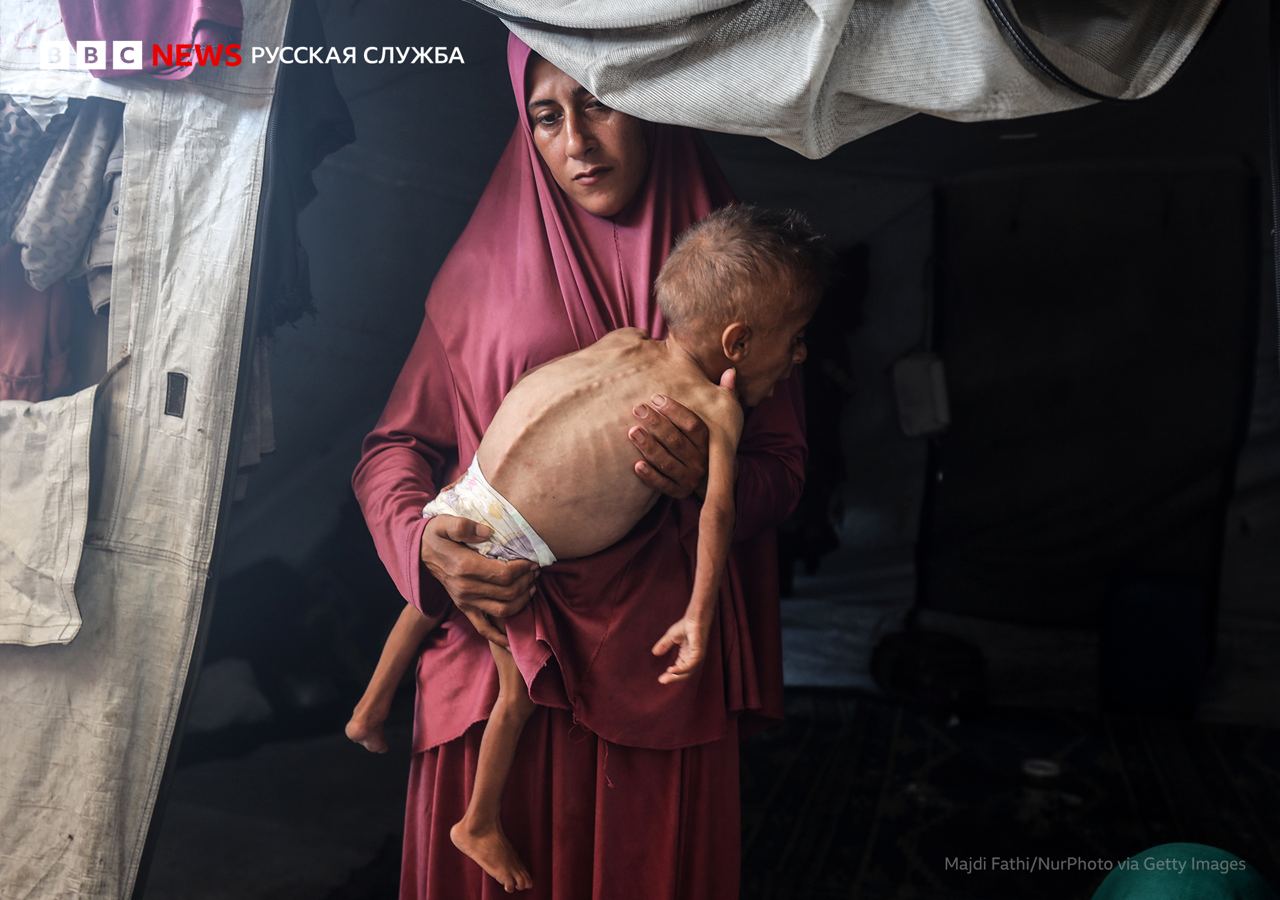
The humanitarian situation in the Gaza Strip is rapidly deteriorating, with dozens of people dying of starvation and more than a million children at risk of acute malnutrition, humanitarian aid agencies and the UN have said, calling for the immediate creation of humanitarian corridors and a ceasefire.
According to the Hamas-controlled Gaza Health Ministry, 10 people have died of hunger in the past 24 hours, and 111 people have died of malnutrition since the conflict began in October 2023, including 21 children who have died in the past three days. Mohammed Abu Salmiya, director of the Al-Shifa Hospital in Gaza City, said that about 900,000 children in the Strip suffer from malnutrition. Adnan Abu Hasna, a representative of the UN Refugee Agency (UNRWA), stressed that 90% of families in Gaza lack access to clean drinking water, and hunger and thirst are used as "weapons of war."
More than 100 humanitarian and human rights organizations issued a joint statement on July 23 warning of “mass starvation” in the Strip. According to them, only 28 trucks of humanitarian aid arrive in Gaza every day on average, which is woefully inadequate for the 2.3 million people in the region. The Office of the United Nations High Commissioner for Human Rights (OHCHR) reported that 1,054 people have been killed or stampeded in incidents at aid distribution points since the end of May 2025, including 766 at points organized by the American company Gaza Humanitarian Foundation (GHF) and 288 at UN and other organizations.
Israel, which controls the perimeter of the Gaza Strip, denies accusations that it is deliberately restricting humanitarian aid supplies. The Israeli Defense Ministry's COGAT unit said that more than 2,000 tons of baby food had been delivered to the region, but did not specify when the supplies would arrive. Israel Defense Forces (IDF) Lieutenant Colonel Nadav Shoshani posted footage on the social media site X showing trucks with humanitarian aid piled up on the Gaza border. "Israel is facilitating the entry of aid, but it should not go to Hamas," he said.
However, the UN reports serious obstacles to aid distribution. According to the spokesman for the UN Secretary-General Stephane Dujarric, the delivery of goods is hampered by ongoing fighting, destroyed roads and fuel shortages. In addition, Palestinians trying to receive aid often come under fire, despite Israeli assurances of safety. The Palestinian side accuses the Israeli military and GHF guards of using force against civilians at distribution points. Thus, on July 25, according to the Hamas Health Ministry, at least 106 people were killed as a result of shelling at distribution points in the north and south of the Strip.
The situation is also getting worse for journalists. The Agence France Presse (AFP) journalists' association reported that its freelance correspondents in Gaza are on the verge of starvation. AFP management has begun evacuating its staff, but leaving the strip is difficult due to a strict blockade. Israel does not allow foreign journalists into Gaza without a military escort.
Amid the humanitarian crisis, the US announced it was sending a senior envoy to Europe to negotiate a possible ceasefire and a humanitarian corridor. Meanwhile, Israeli authorities said they were investigating the shooting at the Catholic Church of the Holy Family in Gaza last week, where three people were killed. The IDF said the strike was an accident due to an “inadvertent deflection of ammunition” and promised to review the rules for opening fire near religious sites.
The international community continues to call for urgent action to prevent a humanitarian catastrophe. The UN insists on security guarantees for the delivery and distribution of aid, as well as an end to hostilities to save civilian lives.