Translated with AI































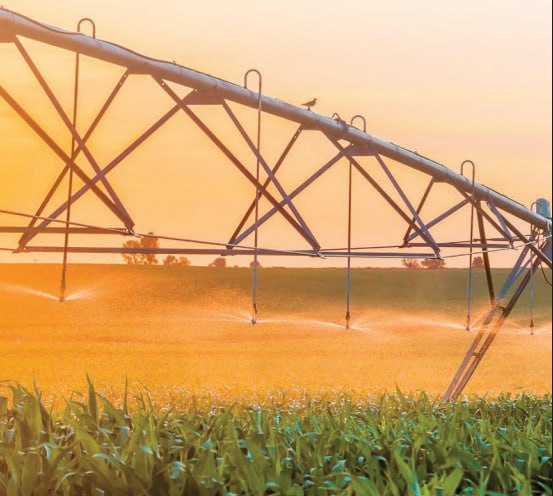
The irrigation equipment market capacity in Central Asian countries is about $200 million per year. Most of the irrigation systems are produced outside the region and the demand for them is constantly growing, the press service of the CIS Executive Committee reports.
The Eurasian Development Bank and the United Nations Industrial Development Organization (UNIDO) presented the report “Irrigation Equipment Manufacturing in Central Asia: Industrialization of the Water Sector”.
Heat waves and droughts rolling over the region are beginning to deplete glaciers and water reserves, while the areas allocated for cultivation of agricultural crops have increased significantly in recent years. Naturally, in such conditions, the issue of the need for economical and rational use of moisture is becoming increasingly acute.
Experts are convinced that localization of production of irrigation equipment in Central Asian countries is a strategic niche for growth and sustainability. Assembly of effective irrigation and watering systems in the countries of the region will reduce the costs of farmers and farmers for their acquisition by approximately 30%.
At the same time, in the conditions of a changing climate, the region's need for such systems will steadily grow. By 2030, the capacity of the domestic market will at least double, and its annual volume will exceed 400 million dollars. That is, localization of production in Central Asian countries will be economically advantageous, the products will be in demand, and the agricultural sector will receive systems significantly cheaper than foreign analogues, and, of course, all this will provide very serious savings in irrigation water.
The current situation is that more than 40% of moisture is lost in irrigation canals. That is, by developing irrigation infrastructure and making it accessible, it is possible to mitigate the negative impact of climate change, reduce water losses, and even increase crop yields through drip irrigation technologies. "Modern irrigation technologies can increase water efficiency by 50-80%, significantly reduce losses, and increase crop yields by 30-50%," the report says.
“The introduction of new irrigation systems requires significant investment, well-thought-out government policy and effective cooperation among all key players in the sector,” EDB analysts note.