Translated with AI
































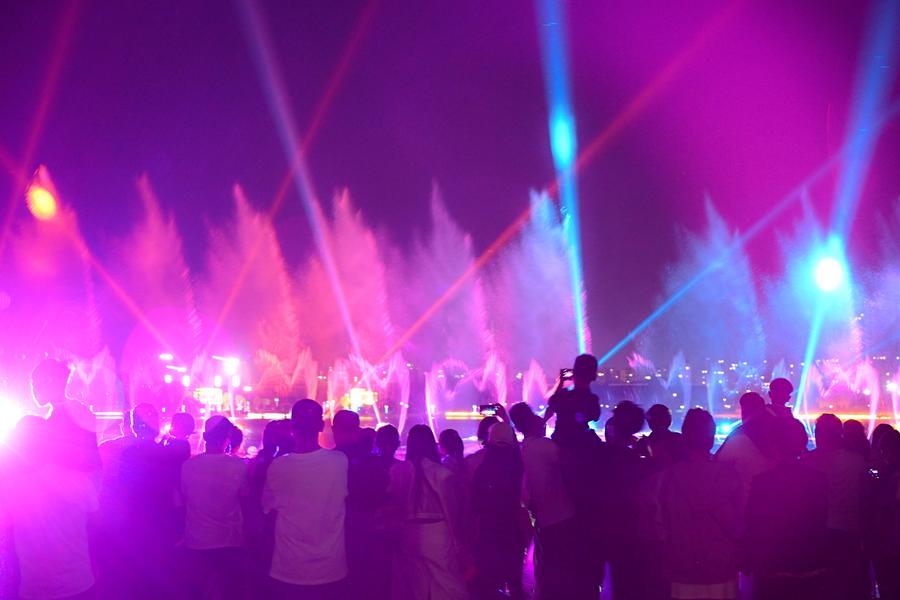
Thanks to rising consumer spending on entertainment and tourism, China's live music industry, especially concerts and music festivals, has grown rapidly, becoming a key driver of service consumption and economic growth, People's Daily reported, citing Xinhua.
Having booked a three-day pass and stayed at a nearby hotel, Gu Chengbo, 28, relaxes with his girlfriend on a sofa in a makeshift massage booth, surrounded by advertising stands and street food vendors. "I came here for the May Day holiday and nothing disappointed me – not the music, not the food, not the accommodation, not the entertainment," he told Xinhua.
Gu Chengbo and his girlfriend arrived at the Dongjiang Port of Tianjin City on the shores of Bohai Bay, where the Bubbling & Boiling Music and Arts Festival is held on May Day.
According to industry experts, the May Day holiday is usually a peak period for music festivals, and a music festival ticket costing 1 yuan (about $0.14) in the host city can bring in 7 to 8 yuan, including expenses for hotels, catering and shopping.
Besides music festivals, concerts are also a good excuse for audiences to explore the city and spend money on travel, food and accommodation. Among major tourist cities, Haikou in southern China's Hainan Province saw a significant increase in hotel bookings during the May Day holiday, up 3.4 times compared to the same period last year. The coastal city, known for its tropical beaches, hosts concerts by popular band Teens in Times from Saturday to Sunday.
According to the China Association of Performing Arts, the number of concerts with over 10,000 attendees in 2024 increased by 84.37 percent compared with the previous year, making it the category with the highest box office revenue in China's performing arts market.
Today, China's live music industry, led by concerts and music festivals, boasts a market size of about 30 billion yuan and drives the development of more than 120 related industries such as food, accommodation, transportation, sightseeing, shopping and entertainment, said Han Yuanjun, a research fellow at the China Tourism Academy.
According to him, this plays a key role in shaping a city or destination, comprehensively stimulating its soft power and economic growth.
In its latest targeted action plan to boost consumption, released in March, the Chinese government promised to expand consumption in the cultural, sports and tourism sectors. The plan would streamline the approval process for commercial performances and increase the number of tickets available for sale, subject to safety measures.
Local governments have also stepped up efforts to encourage music performances in an effort to boost consumption. In southwest China's Sichuan Province, organizers of large-scale concerts and music festivals will receive incentives of up to 5 million yuan in 2025, depending on the total number of tickets sold and the revenue generated.
The southern Chinese city of Dongguan took advantage of the debut of the Strawberry Music Festival during the May Day holiday, organizing more than 500 cultural performances and six tourist routes to turn the festival buzz into economic gains.
(Editor: Yang Qian, Deng Jie)