Translated with AI

































The United Nations and humanitarian partners warned that the continued expansion of Israeli-controlled areas in the Gaza Strip following the ceasefire agreement is seriously limiting the work of humanitarian organizations, according to a joint statement released Wednesday.
The warning comes amid ongoing mass displacement and a worsening humanitarian crisis throughout the occupied Palestinian territory.
A joint statement from humanitarian groups in the occupied Palestinian territory said the expansion of Israeli control zones, coupled with restrictions on movement, was reducing the ability of aid workers to provide assistance and reducing the space available to civilians, many of whom had already been repeatedly displaced by the conflict.
According to the UN, Israeli forces have repeatedly used lethal force to prevent people from entering areas they control. According to UN-confirmed information, from October 10, 2025, to early April, 196 Palestinians, including 18 women and 43 children, were killed in attacks near Israeli military zones. Many of the victims were reportedly in areas without clearly defined boundaries.
The UN also stated that current restrictions are seriously hampering the delivery of humanitarian aid. Movement restrictions are causing delays and disruptions in the delivery of vital goods and services. Some humanitarian organizations have been forced to scale back or temporarily suspend critical programs, affecting thousands of families.
Furthermore, UN agencies and humanitarian organizations have warned of a further reduction in space accessible to civilians. According to the UN, restricted access zones now cover approximately 65 percent of the Gaza Strip, with most of them closed to local residents. Maritime access to the territory also remains blocked.
The UN and non-governmental organizations reiterated their call for an immediate end to attacks on Palestinians moving near Israeli positions. The statement emphasized that civilians must be protected in accordance with international humanitarian and human rights law.
Humanitarian agencies also reported that skin diseases and cases of acute diarrhea continue to spread in the Gaza Strip, fueled by overcrowding and a lack of clean water. They estimate that efforts to address this situation are hampered by severe access restrictions and a lack of funding: less than a quarter of the funds needed to implement the humanitarian plan for this year have been received so far.
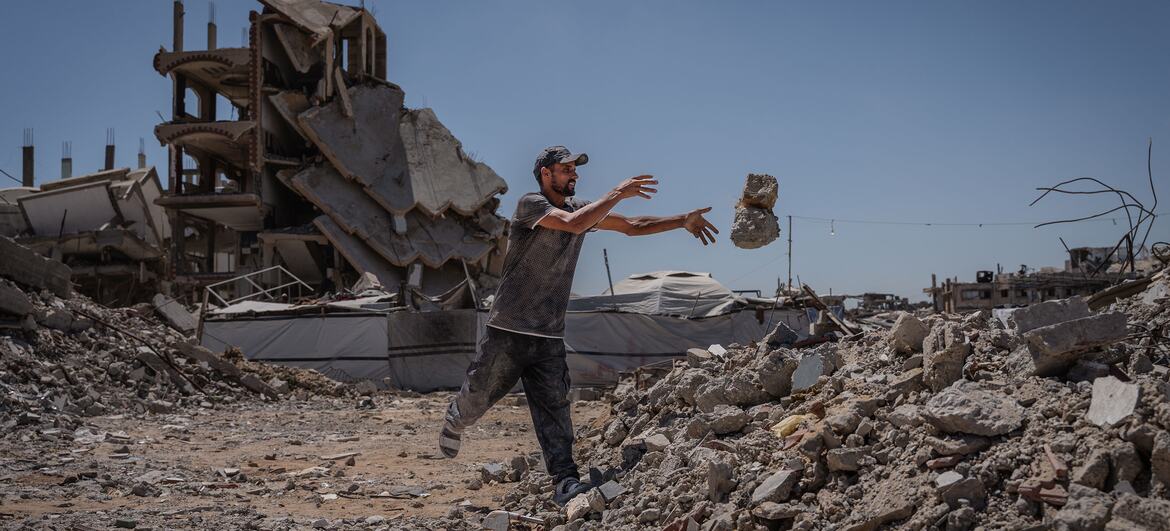
Meanwhile, the UN Development Programme reported the completion of clearing half of the massive solid waste dump created during the conflict at the Firas market in Gaza. The organization called this a crucial step in the restoration of the historic shopping center. According to UNDP, approximately 250,000 cubic meters of waste, which occupied 75 percent of the market's surface, have already been removed.