Translated with AI
































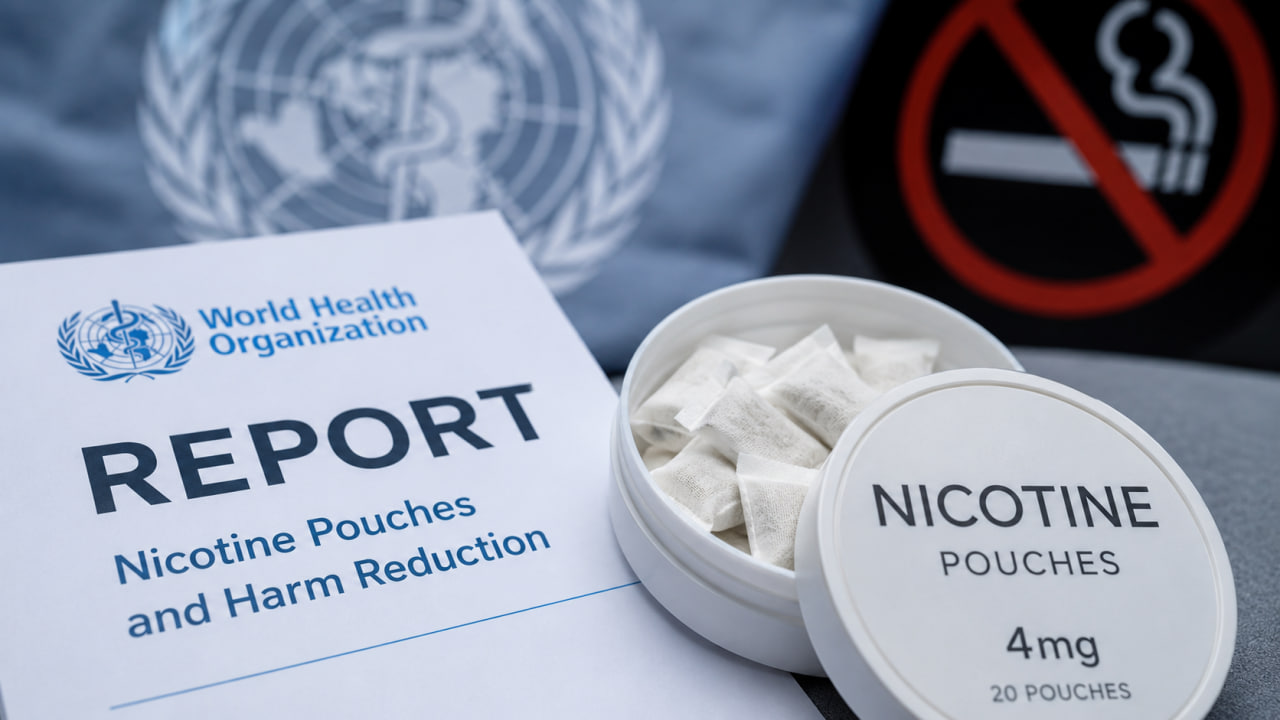
The global discussion about reducing the harm from smoking is reaching a new level. Amid the search for less risky alternatives to cigarettes, nicotine pouches—a smokeless product category that has already become the subject of scientific research, government programs, and regulatory decisions in various countries—are attracting increasing attention.
Nicotine pouches, or nicpacks, are smokeless nicotine-containing products for oral use. They contain no tobacco leaf and are used without combustion. Tobacco combustion is considered the primary source of most of the toxic and carcinogenic substances produced during cigarette smoking.
Therefore, in recent years, nicotine pouches have increasingly been considered by researchers in the context of harm reduction for adult smokers who are not ready to give up nicotine completely but want to quit cigarettes. However, experts emphasize an important point: nicotine remains an addictive substance. This means that such products are not harmless and are not intended for minors, nonsmokers, or those who have not previously used nicotine.
However, the absence of combustion significantly reduces exposure to many harmful substances compared to cigarette smoking. This is supported by the results of numerous studies. In particular, a review of scientific papers published in 2026, led by internationally renowned cardiologist Konstantinos Farsalinos, showed that adult smokers who switch entirely to nicotine pouches can experience a reduction in exposure to toxic substances by tens of percent, and in some studies, up to 96%.
Harm reduction issues are currently being actively discussed not only in the scientific community but also at the public policy level. Sweden is considered one of the most well-known examples. The country has a risk-based approach to regulating smokeless nicotine products, and the daily cigarette smoking rate among adults is approximately 5.4%—one of the lowest in Europe. By comparison, several decades ago, almost every second man in Sweden smoked. Now, with smoking rates declining, the country's lung cancer rate is approximately 58% lower than the European average.
A similar approach is being taken in New Zealand. Along with strict measures to prevent minors from accessing nicotine products, authorities there are considering less harmful alternatives as a means to reduce smoking among adults.
The decision by the US Food and Drug Administration (FDA) also drew particular attention from experts. In January 2025, the agency granted marketing authorization for ZYN nicotine pouches after reviewing a significant amount of scientific data. The FDA stated that such products could benefit public health because adult smokers who switch completely to them significantly reduce their exposure to harmful chemicals compared to continuing to smoke cigarettes.
A new World Health Organization report on nicotine pouches has revived the topic of this category, but has raised questions among some experts due to its incomplete review of international experience and differences within the category itself. The document acknowledges that these products contain fewer toxic substances than cigarettes and may play a role in reducing tobacco consumption or promoting smoking cessation among adult smokers.
However, international experts point out that the report focuses primarily on potential risks and regulatory issues, while international experience with the use of smoke-free products in harm reduction strategies is largely absent. Specifically, the document fails to examine in detail the cases of Sweden, New Zealand, and the decisions of the US FDA, which are often cited by experts as examples of an alternative approach to smoking cessation.
Another topic of discussion was the approach taken to the nicotine pouch category itself. Accordingto some experts, the report effectively lumps together both legal products manufactured in accordance with quality standards and undergoing the necessary testing, and products of dubious origin that may be distributed outside the regulated market.
This is why experts emphasize the need for strict government oversight. This includes not only age restrictions and prohibitions on sales to minors, but also requirements for product composition, certification, production transparency, and combating illegal markets. Counterfeit products fail to undergo the necessary quality and safety testing, and their distribution is often accompanied by a violation of youth access control mechanisms.
In short, the global expert community is still searching for an answer to the difficult question of how to reduce the harm from smoking among adults without creating new risks for young people. While some countries rely on strict restrictions, others are successfully experimenting with harm reduction approaches. One thing is clear: future policy in this area should not be driven by emotion, but rather be informed by scientific data and take into account the positive regulatory experience of countries that have already achieved success in combating smoking.