Translated with AI























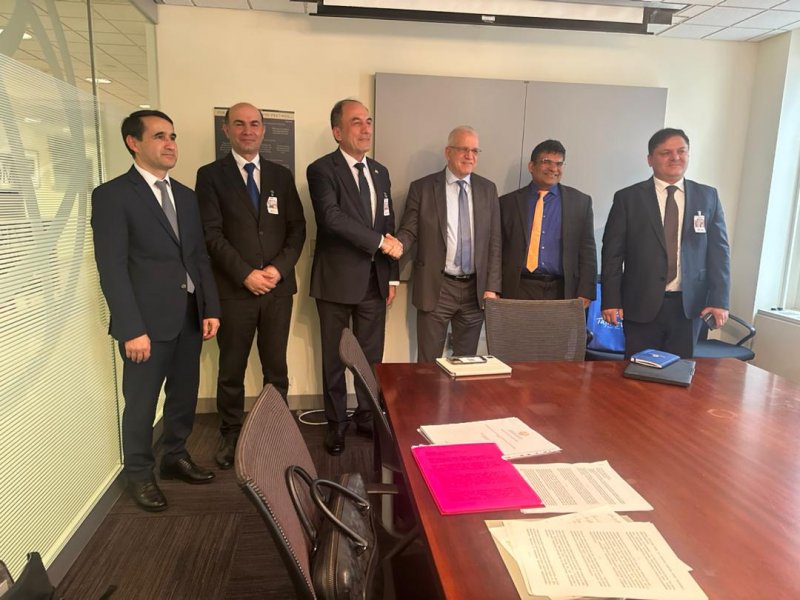
The Rogun Hydroelectric Power Plant (HPP) project remains an absolute national priority for Tajikistan and is crucial for the country's future. Future proposals and priorities in the transport sector will be developed taking into account the significance of this strategic facility. This was stated by Tajikistan's Minister of Transport, Azim Ibrokhim, at a meeting with World Bank representatives held in Washington, D.C., on March 11, according to the ministry.
According to him, three important structural reforms have been implemented in the country over the past 12 months. In December 2024, President Emomali Rahmon established the Road Fund, which became the first targeted source of funding for road maintenance. In June 2025, the Open Skies regime was implemented, and in October 2025, the nationwide rollout of the ASYCUDA World electronic system was completed, cutting customs clearance time in half.
The National Development Strategy of the Republic of Tajikistan to 2030 envisions transforming the country into an important regional transit hub. To achieve this goal, a modern road asset management system is being developed across the entire road network, a regulatory framework for public-private partnerships is being established, taking into account transport concessions, and the ministry's professional capacity is being developed—from transport planning and data analysis to contract management and the design of climate-resilient infrastructure.
Road safety was a particular focus of the meeting. It was noted that road accidents cause significant damage to the country every year and remain one of the leading causes of death among young and working-age people.
The Minister reported that, with support from the World Bank, the first National Road Safety Strategy for 2026–2040 has been developed as part of the "Improving Regional Transport Links in Central Asia-4" project. The document is based on the "Safe System" approach and is aligned with the goals of the UN Decade of Action for Road Safety. Pilot measures are currently being implemented along priority transport corridors.
According to him, the key task is implementing this strategy. This requires support for the creation of a national road accident data system, the implementation of road safety inspections and audits, the development of speed management infrastructure, and large-scale public awareness campaigns.
The Minister also noted that Tajikistan has the potential to become a regional leader in road safety and share its experience within the transport corridors of the Central Asian Regional Economic Cooperation Program.
In this regard, he expressed hope for continued support from the World Bank as part of the development of a new Partnership Framework Strategy with Tajikistan for 2026–2031, including funding for priority activities envisaged by the approved Program for the Development of the Country's Transport Complex.
It is noted that in 2025, the road construction project in the Gorno-Badakhshan Autonomous Region, implemented as part of BRAMOMA-4, was awarded the "Project of the Year" prize at the FIDIC International Contract Users' Awards in London. Tajikistan became the first Central Asian country to receive this award. Previously, only the Russian Federation had received this award among CIS countries, in 2016.
It is also reported that the ministerial conference “Transport Transformation 2026” was held on March 10–11 at the World Bank headquarters in Washington.