Translated with AI























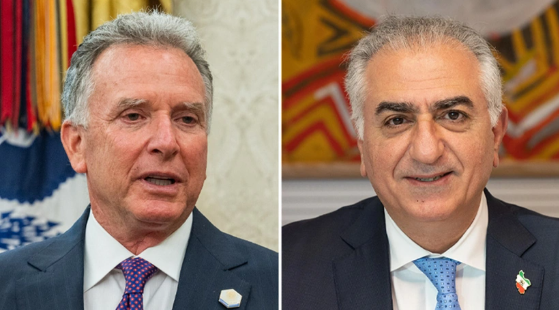
The eldest son of Iran's last Shah, Reza Pahlavi, met with US Presidential Envoy Steven Witkoff for the first time since the start of mass protests in the country to discuss the situation in Iran. As reported by Axios on Tuesday, January 13, citing a senior US official, the meeting took place over the weekend behind closed doors. The results of the talks have not yet been disclosed.
On the morning of January 13, the White House national security team held a meeting to discuss options for responding to anti-government protests in Tehran and other cities. US President Donald Trump was not present. An Axios source noted that the discussions were "in a relatively early stage," and no decisions regarding military action against Iran were being made at this time.
Previously, the American administration viewed Reza Pahlavi as a minor political player. However, amid protests and mass demonstrations chanting his name, the White House began to reconsider its attitude toward the Shah's heir.
According to an Axios source, US Secretary of State Marco Rubio stated in closed meetings that the administration is currently considering non-military measures to support the protesters. That same day, the US president called on protesters in Iran to "continue protesting" and "take control of government institutions," adding that "help is on the way." He also recommended that US citizens leave Iran.
Reza Pahlavi, speaking on Fox News on January 11, declared his readiness to return to Iran and called on the US leadership to act at a "decisive moment." The Shah's heir announced that he is already planning the composition of the transition team. Pahlavi believes he is a symbol of hope for Iranians and a reminder of the era of his father, Mohammad Pahlavi, which ended with the 1979 revolution.
Mass protests in Iran began on December 28, 2025, amid dire economic turmoil. Demonstrators took to the streets of Tehran and other major cities despite harsh security measures and an internet shutdown. They chanted slogans against Supreme Leader Ayatollah Ali Khamenei. According to the HRANA news agency, by January 13, the number of confirmed deaths had reached 2,003, including 1,850 protesters, 135 government-affiliated individuals, nine minors, and nine civilians who did not participate in the protests.