Translated with AI
































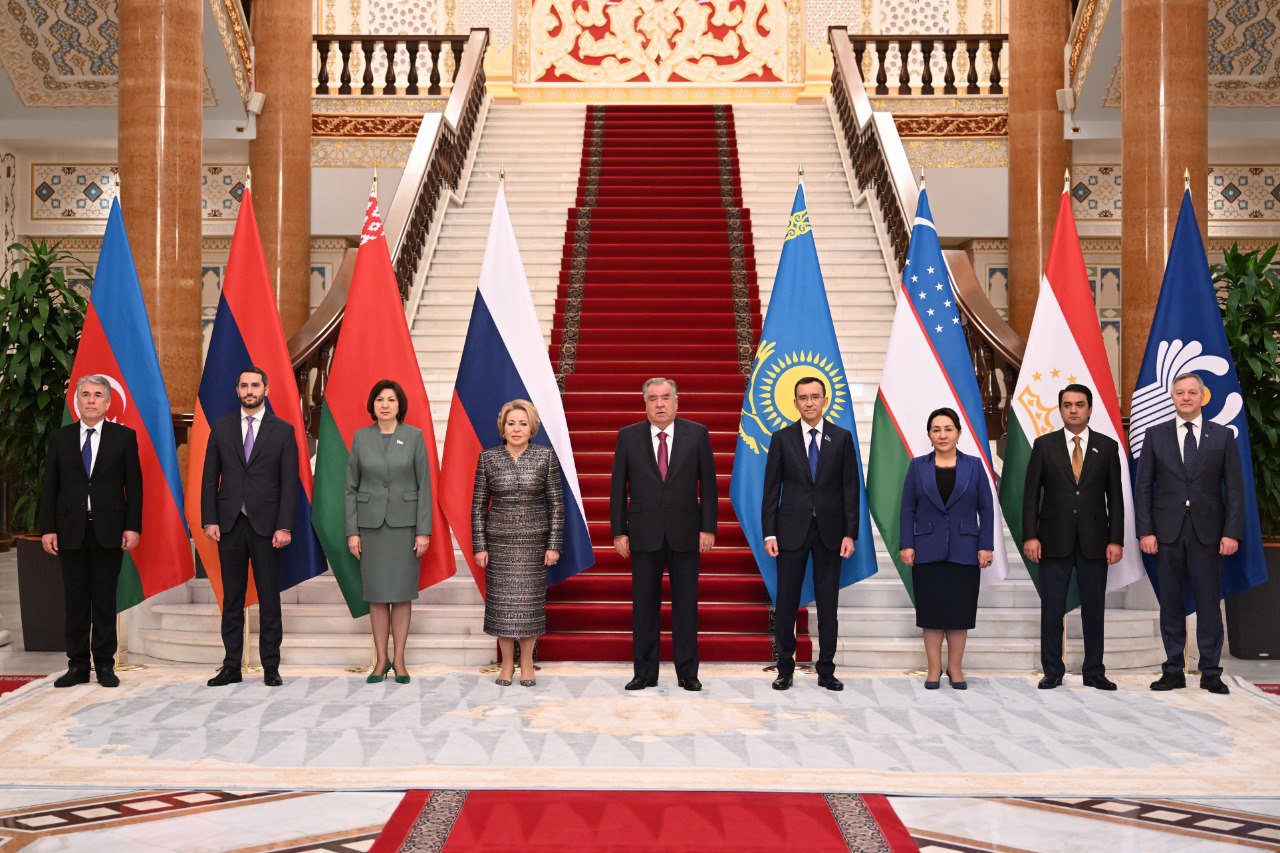
President of the Republic of Tajikistan Emomali Rahmon received the heads of parliamentary delegations from the Commonwealth of Independent States (CIS) member states at the Palace of the Nation. They arrived in the country to participate in the meeting of the CIS Interparliamentary Assembly.
According to the press service of the President of Tajikistan, Emomali Rahmon emphasized the importance of the Interparliamentary Assembly as a sought-after platform for comprehensive and constructive dialogue between CIS member states. The Assembly is currently conducting comprehensive work in a variety of areas.
"The activities of the Interparliamentary Assembly, along with the development and harmonization of the legislation of our states, encompass many other key areas of cooperation. These include, in particular, politics and security, economics, and interaction in the social and humanitarian spheres," the President noted. He also emphasized that these areas offer enormous opportunities and resources that must be effectively utilized for the benefit of the peoples of the CIS countries.
Emomali Rahmon recalled the high-level events held by Tajikistan during its CIS chairmanship, including the CIS Heads of State Summit and the Second Meeting of Heads of State in the Central Asia-Russia format, which took place in Dushanbe in October 2025.
According to the President, over 100 multi-level events have been held during Tajikistan's chairmanship of the CIS, including the meeting of the CIS Interparliamentary Assembly, which is currently taking place in the country's capital.
During the meeting, participants expressed satisfaction with the development of interparliamentary cooperation among CIS member states at all levels. It was emphasized that Tajikistan is interested in continuing joint work within other interparliamentary cooperation structures, including the Inter-Parliamentary Union, the CIS Inter-Parliamentary Assembly, and other associations.
In conclusion, Emomali Rahmon called on the heads of parliaments of the CIS countries to further strengthen interstate cooperation in all areas, including the fight against modern threats such as terrorism and extremism, religious radicalism, cyber threats, and other forms of cross-border crime.