Translated with AI

































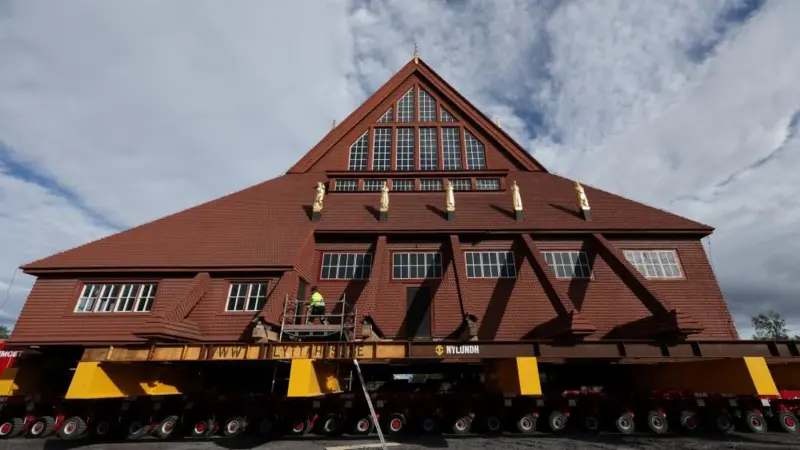
A unique project is underway in the Swedish city of Kiruna: moving a 113-year-old church weighing 672 tons to a new site. The building, built in 1912, is being moved in one piece on a giant wheeled platform. The distance is approximately five kilometers, and the maximum speed is 500 meters per hour. The operation is expected to last two days, according to the BBC.
The church's relocation was necessary due to the threat of subsidence caused by faults formed by more than a century of iron ore mining. The building stands 35 meters tall and 40 meters wide. It is recognized as one of the most beautiful Swedish buildings built before 1950 and is a symbol of the country's northern region.
The ceremony to begin the move took place on Tuesday with the blessing of Parish Vicar Lena Tjärnberg and Bishop Ås Nyström of the Luleå Diocese. Afterward, the church set out, advancing only 30 meters in the first hour.
Hundreds of people watched the structure's slow progress along the road. "The crowd was enormous. People came from all over Sweden and abroad. This is history unfolding before our eyes," noted cultural specialist Sofia Lagerlöf Mättäjä.
Project manager Stefan Hålmblad Johansson emphasized the scale and complexity of the operation: “This is a historic event, we have no room for error, but everything is under control.”
Preparations for the move took several years. The main task was preparing the road: it was widened to 24 meters, lampposts and traffic lights were removed, and the bridge was dismantled. One of the most delicate aspects was preserving the church's internal treasures, which could not be removed. Among them are the painting above the altar, painted by Prince Eugene, and the organ with its thousand pipes, which will remain inside, fully protected and secured.
The threat of ground subsidence affected many areas of Kiruna. By the mid-2010s, several buildings in the city had already been relocated or rebuilt. The church's relocation was delayed as long as possible, as it can only be moved in one piece, unlike other buildings, which are dismantled in sections.
Under Swedish law, mining operations are prohibited beneath populated areas, but the city is experiencing the effects of changes in the subsurface that have been forming for decades. Robert Ylitalo, CEO of Kiruna's developer, emphasized: "There is no risk of people falling into the cracks, but the cracks could damage the water, electricity, and sewerage systems. People need to relocate before the infrastructure collapses."
The project to relocate residents and relocate buildings is estimated to cost over 10 billion Swedish kronor (approximately $1 billion). Financing is provided by LKAB, the iron ore mine operator and the city's largest employer.
Local residents watch the process with sadness; many of them remember visiting the church for the first time with their grandparents, and now they take their grandchildren there.