Translated with AI
































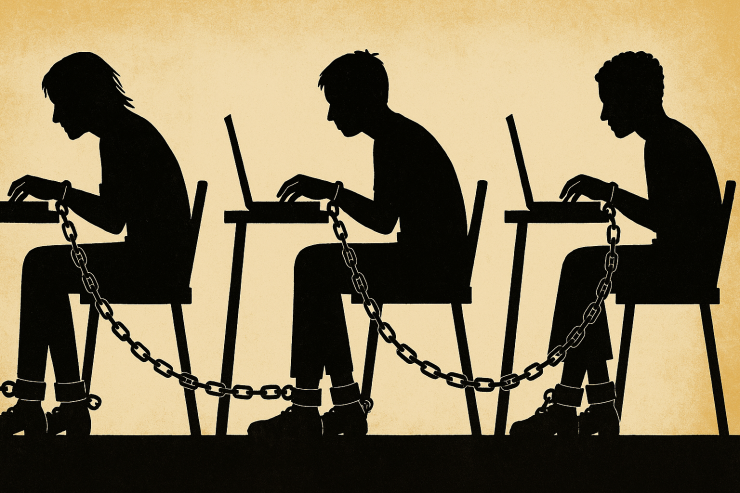
Hundreds of Kazakhstanis fall into labor slavery trying to find employment abroad, and there are hundreds of thousands of such people in the world. Behind the beautiful promises of highly paid work and comfortable conditions, real traps are hidden.
Brief summary of the text from Tengri AI
One such case involved a young Kazakhstani who was deceived into going to Myanmar. In an interview with Tengrinews.kz, he told how he was lured abroad, how he was cut off from all contact with the outside world, how he was forced to work almost around the clock, deceiving other people, how he miraculously escaped, and what he does not advise others to do.
Dream Job for Thousands of Dollars
Alikhan (name changed for security reasons) saw an ad on a popular job site in August 2024 for a job at an IT company in Bangkok with a salary of up to four thousand dollars (approximately 2.1 million tenge at the current exchange rate). Everything looked official: the company's website, contact information, a vacancy for a technical support specialist.
"At first, everything looked fine. We were met at the Bangkok airport and taken to a hotel. Three days later, they put us in a car and said they would take us to the office. On the way, I began to understand that something was wrong," recalls Alikhan.
"We were met with weapons": how to get into KK Park
The car took the group to a river on the border between Thailand and Myanmar. There, according to Alikhan, they were transported by boat. Armed men were already waiting for them on the other side. This is how the journey to KK Park began.
KK Park is an illegal quasi-city in Myanmar that has become a symbol of modern-day labor slavery and digital fraud. It is located in the border area between Thailand and Myanmar, in an area partially controlled by criminal groups and armed groups. KK Park is widely known and even marked on maps.
Alikhan tells how they were brought to this place: there were six of them, all young Kazakhstanis aged 24–25.
"I realized that something was wrong when we arrived at this border town. The whole way we were not allowed to leave the car. There was a driver who understood Russian and English. In the end, we were met by armed men. I was in a panic, I thought this was the end. I no longer hoped for a favorable outcome and resigned myself to the fact that I would die."
Slavery under the guise of a contract
Upon arrival at KK Park, their passports were immediately taken away. According to Alikhan, they were photographed, registered, and then their status was announced:
"We were immediately told that we had been enslaved. It was impossible to refuse."
In total, there were about 10,000 people in that camp or "park," according to Alikhan. Of those, about 40 were citizens of Kyrgyzstan, Uzbekistan, and Kazakhstan. He and other "new" Kazakhs were sent to a dormitory where men and women from Central Asia, the CIS, the United States, and South Africa lived. The conditions were reminiscent of the army: bunk beds, strict rules.
"We were locked in a room and told that it was impossible to get out. If we tried to escape, they would kill us. The room had a balcony, and we began to look around the town. On the streets there were signs of popular coffee shop and fast food chains. Later we realized that all this was a sham, created only to calm those who were enslaved here," Alikhan describes life in KK Park.
The next day, the Kazakhs were taken to an office where there were also other citizens from the CIS countries.
They were told they had "signed a two-year contract" and would be working at a scam center – a fraudulent call center designed to lure victims through a love scam.
Reference: Love scam, love scam or romantic deception is a fraud in which call center operators pose as potential romantic partners online to trick victims into giving them money.
Alikhan and others were tasked with conducting fake romantic correspondence with Russians and convincing them to invest in cryptocurrency through fake exchanges that mimicked Binance or Bybit using USDT on the TRC20 network.
"We didn't do this of our own free will – everyone was forced to work, and if they didn't, they used force. Our target audience was wealthy women from Russia over 40. We corresponded from fake accounts, supposedly built romantic relationships with them, and then persuaded them to invest in cryptocurrency. We were trained to use artificial intelligence, which replaced the face and body in the video. Everything looked as realistic as possible."
Their working day could last up to 17 hours. Each had an average of five to 10 potential victims. The mafia leaders set the task of extorting from each victim from 200 to 250 thousand dollars.
"The turnover in this "business" was colossal. The plan (KPI) set for the team from the CIS countries was one and a half million dollars per month. If the team fulfilled the plan, the Chinese would ring a gong – a sign of success."
Alikhan notes that in other teams he heard gongs ringing 5–6 times a day — this meant that the plan had been fulfilled. In case of failure to fulfill the KPI, punishments began: people were not allowed to leave the office for the dormitory, they could be deprived of food or sleep.
"I felt morally broken. It's a terrible feeling to understand that because of you a person loses everything. Women sold apartments, cars, spent their last savings. Once I corresponded with a mother of many children and could not deceive her. I simply deleted the correspondence. But all our actions were monitored by mafia leaders – for this I was sent to the torture room," he shares his experiences.
"Press rooms", beatings and humiliation
Such premises were called "press rooms". According to Alikhan, among employees from the CIS countries they were also called "red lines", beyond which it was better not to go:
"They scared us with these rooms. For remote correspondence (with a mother of many children – editor's note) I was taken to this room, four powerful strobe lights were turned on, which hit my eyes with a bright light. They left me in this room for 12 hours without food, without water, under the light and screams. It was psychological and physical terror. After that, I could not come to my senses for three more days."
Sometimes they witnessed particularly brutal punishments:
"We saw how Africans were tortured. They were hung up, their fingers were smeared with sweet syrup or sugar – ants attacked them. Then we saw how they could not walk. It was terrible."
But Alikhan says that they punished not only for some special "offenses." Strong psychological pressure was exerted on everyone, and physical force and torture were often used:
"They beat us with electric shockers, handcuffed us to a chair. They left cuts on our hands – for fatigue or failure to fulfill the plan. There were guards on duty in the building, they made sure that we sat up straight. For being late, they beat us with bamboo sticks. I was left with a cut around my eye for going down the stairs without permission."
"Nobody returned from the "black companies"
Alikhan continues the story: if a person failed to cope with the plan or showed disobedience, he was threatened with transfer to the so-called "black company" – a kind of "punishment camp"; a place from which, according to rumors, no one returned. The conditions there were even harsher: no rest, constant surveillance, torture, and in the event of an attempt to escape – death. Sometimes they sent there even after the end of the so-called contract.
"There you work until death. Even ransom doesn't save you. I haven't seen a single person who worked out a contract in a "black company" and came back," he says.
Slave traders actively used threats of organ removal as a method of pressure.
"Our bosses told us directly: if you don't pay the ransom, you can be sold for your organs. We knew that this was really happening. People were taken away, and no one saw them again," Alikhan recalls.
Rumors of forced organ harvesting were rife, he said, and were part of a broader system of terror and manipulation that kept people in constant fear.
Ransom or death
After a few months, Alikhan's team began to perform poorly. Then they were given an ultimatum: either they pay compensation – that's what they called the ransom – or they are sent to the "black company".
"They gave me a week to raise money. At first they said $100,000, then they lowered it psychologically. Each person negotiated separately, like on the black market… They gave me a week to find the ransom amount," Alikhan was allowed to contact his relatives. "I started calling my family, crying, begging them to ransom me. In the end, my relatives raised $37,000 (about 19.5 million tenge at the current exchange rate) in cryptocurrency for me."
And two days after the ransom was paid, the Myanmar army entered the town. As a result, diplomats helped return to their homeland citizens of Kazakhstan, Uzbekistan and Kyrgyzstan who were forced into labor slavery in Myanmar.
It was April 2025. It was reported then that four Kazakh citizens had been released and handed over to diplomats at the Mae Sot border crossing in Thailand. However, Alikhan and three other Kyrgyz citizens were not among them – they returned to their homeland later, after paying a ransom:
"There were four Kazakhs with us – I knew them personally. I and other citizens from Central Asia paid the ransom and each returned our own way. We had to swim across a river patrolled by the Thai army. At any moment we could be shot. Suddenly I heard shots. In a panic, I did not understand who exactly was being shot at. Having swum across the river, I ran as fast as I could across the field, without turning around, without stopping, just running as fast as I could."
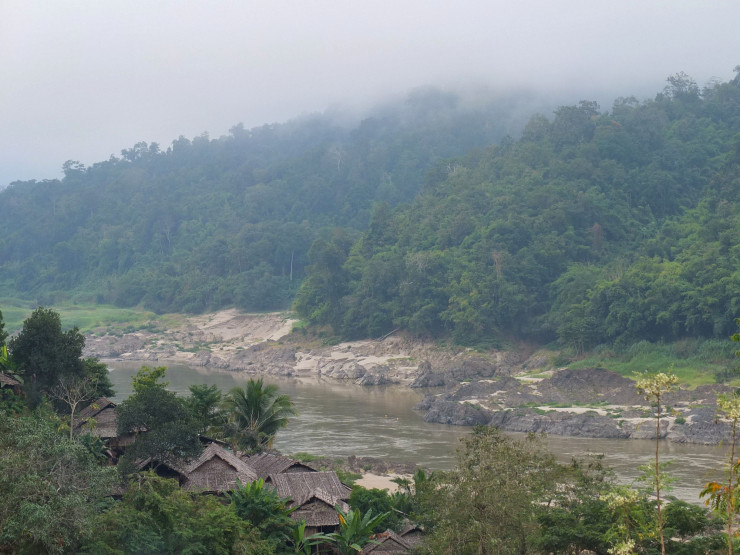
According to Alikhan, they were then taken to the border town of Mae Sota.
"I contacted the consul, and he instructed me where to go. We went to the immigration police, after which we were arrested and sent to prison. We spent 10 days there, and then we were transported to the immigration prison in Bangkok, from where we were later deported. Even when I was already in Bangkok, I could not believe that I had escaped slavery. Everything seemed unreal. I was sure that I would stay there forever and die, because there were no guarantees – we could be shot at any moment," the man recalls.
Valuable information about the mafia
The Kazakh Foreign Ministry confirmed Alikhan's story. And they told Tengrinews.kz that the first contact between this citizen and the Kazakh embassy in Thailand took place back in March 2025. From that moment on, the consul was in constant contact with him, consulting him daily and monitoring the development of the situation.
Alikhan told him that he and other “colleagues” from the camp could independently get from KK Park to the Thai border – the city of Mae Sot.
The embassy gave him detailed instructions on what and how to do next:
Upon arrival in Mae Sot, contact the immigration police;
tell that he is a victim of labor exploitation;
go through the official procedure through the court.
Alikhan did just that. At the end of March, as he himself said, the Mae Sot court made a decision. According to the procedure, after that, the victims of slavery are transferred to the Bangkok immigration prison, which takes from two to four weeks, depending on the workload of the center and the number of foreigners waiting to be sent. The thing is that it is carried out once a week, and the immigration police transfer no more than 20 people per trip. But, according to Kazakh diplomats, thanks to their efforts, Alikhan was included in the first such twenty. And in the end, everything happened quite quickly:
"With the assistance of the embassy, his departure to his homeland was urgently arranged. The embassy agreed on the date with the Thai immigration service and also helped with the logistics, including confirming the route with the airline," the Kazakh Foreign Ministry commented on this case.
Already in April, Alikhan was in his homeland.
Also, according to information provided to the editorial office by the ministry:
"The citizen (that is, Alikhan – editor's note) provided valuable information about a transnational criminal group:
– the existence of a criminal scheme for recruiting citizens of Kazakhstan, including nicknames, Telegram channels and the name of the alleged leader (presumably Yeldos Smagulov);
– information on the amounts paid by the organizers for each recruited citizen (1,200 dollars).
"I never thought I'd be standing in front of my own grave"
Alikhan returned to Kazakhstan with relief after eight months of slavery, but what he saw at home shook him to the core:
"When I returned, it turned out that my family thought I had died. They had already built a grave for me in Astana. It was terrible. I never thought that one day I would stand in front of my own grave."
He admits that he still can't fit into normal life. He is haunted by difficult memories of what he experienced, he experiences constant anxiety, his blood pressure fluctuates, and he suffers from panic attacks:
"Sometimes I have dreams as if I'm still there. It's hard to adapt. There's a strange feeling, as if it was better there. I came back as a different person. It's very hard now. I'm angry, it's hard to control myself. I guess there are just no people who can support me. Someone to tell, someone who would truly understand, someone who would listen…"
Despite the fact that he managed to get out, some citizens of Kazakhstan still remain in that very "ghost town" in Myanmar. Among them are men who have taken up recruiting new victims, and girls who have agreed to work in call centers using artificial intelligence technologies.
"The Kazakhs who stayed were the ones who did the recruiting. For each person they invite, they get about 1,500 dollars (about 800 thousand tenge – editor's note). They themselves work as scammers in the call center, and for recruiting new people they get extra pay. I saw young guys aged 18-19 who were tricked into joining by their friends."
Alikhan shows what "high-paying job" ads look like and recalls his story to understand what is hidden behind them:
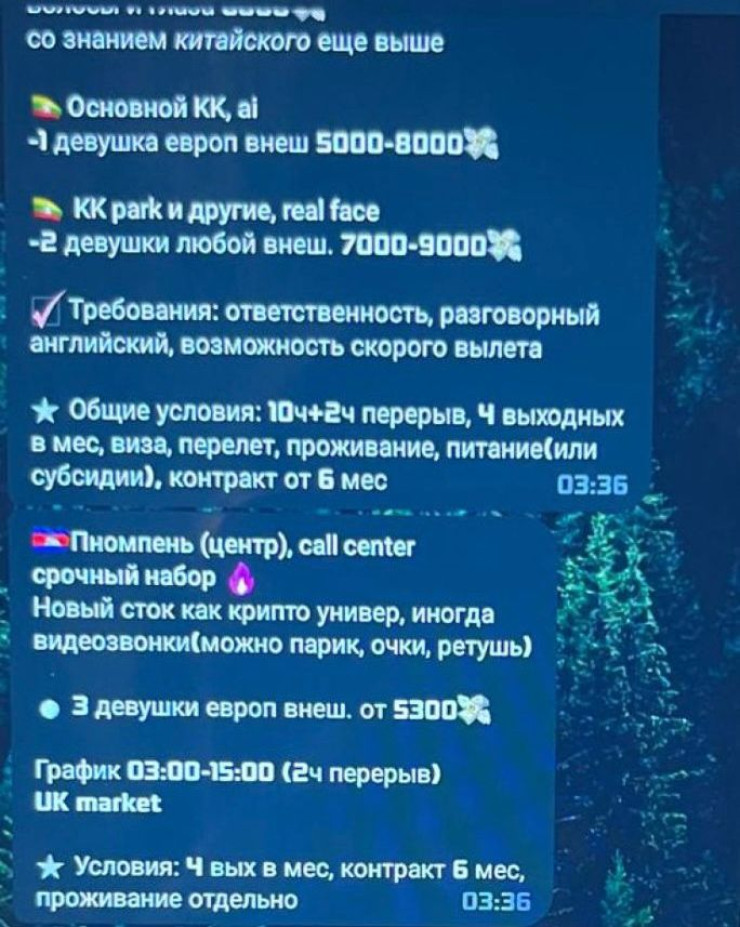
Behind seemingly voluntary participation there is often another truth: psychological pressure, the illusion of choice and gradual involvement in a scheme in which some become victims and others become accomplices in the destruction of other people's lives.
"They'll sell you like a piece of meat"
The man wants to warn Kazakhstanis and residents of other CIS countries: you need to be extremely careful with job offers abroad, even if they come from friends or acquaintances.
"There are still CIS citizens there who are recruiting. Don't fall for it. Whoever writes to you, even if it's your friend whom you trusted, he can invite you there simply for a commission, like for a piece of meat. Money has clouded their minds. Beware of working in Cambodia, Laos, Myanmar and Thailand. If they write to you, immediately say "no" and block. Check everything a thousand times."
According to him, deceptive offers are often accompanied by beautiful descriptions, promises of high salaries and comfortable conditions. However, this is part of a psychological trap:
"If you don't know the language, don't have a qualification, don't have a diploma and they offer you a good salary – it's definitely a scam. They will do everything, even give you an advance, to lure you to this city. That's where it ends. You won't get out. Then it will be very difficult or even impossible. You can die there."
"Golden Triangle": How Many Kazakhstanis Remain in Labor Slavery
Reference: According to the Interpol of the Ministry of Internal Affairs of Kazakhstan, the largest number of cases of slavery are associated with Laos, Cambodia and Myanmar