Translated with AI























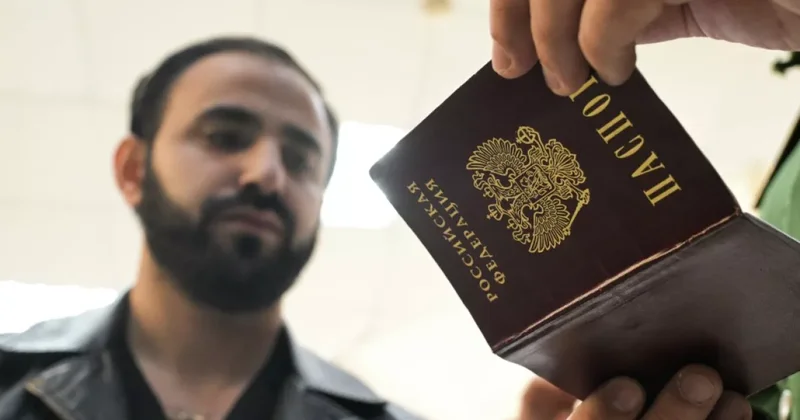
The Russian government has submitted bill No. 1163989-8 to the State Duma, which would prohibit individuals with unexpunged or unspent criminal records from obtaining Russian citizenship or temporary residence permits. This was reported by Interfax.
The explanatory note to the document states that the draft federal law was developed to eliminate the possibility of acquiring Russian citizenship or obtaining the right to reside in the country by foreign citizens or stateless persons who have an unremoved or unexpunged conviction for committing a crime on Russian territory or abroad, recognized as such in accordance with the legislation of the Russian Federation.
Currently, a foreign citizen's outstanding or unexpunged criminal record for committing a serious or especially serious crime in Russia or abroad is grounds for denial or revocation of a previously issued temporary residence permit, temporary residence permit for educational purposes, or permanent residence in Russia. However, foreign citizens are not required to provide proof of a clean criminal record.
In order to eliminate this legal gap, the draft law proposes to introduce amendments establishing the obligation of foreign citizens who have reached the age of 14, when applying for a temporary residence permit, a temporary residence permit for the purpose of obtaining an education, or a residence permit in Russia, to submit to the territorial bodies of the Ministry of Internal Affairs of Russia a paper document issued by the government agencies of a foreign state confirming the absence of a criminal record or, if one exists, containing information about the crime committed.
The document also notes that, due to the refusal of authorized Ukrainian bodies to issue certificates of no criminal record to their citizens for submission to the competent authorities of the Russian Federation, it is proposed to establish a transition period of two years after the entry into force of the proposed federal law. During this period, Ukrainian citizens will be exempt from submitting these certificates.
It is expected that the federal law will come into force 180 days after the date of its official publication.